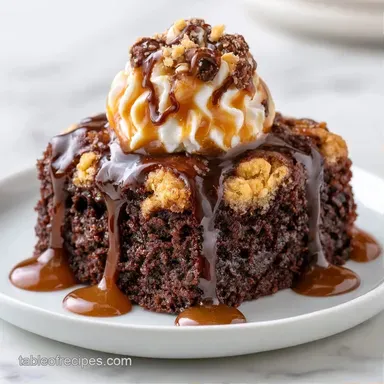
Salted Caramel Brookies with Brown Butter
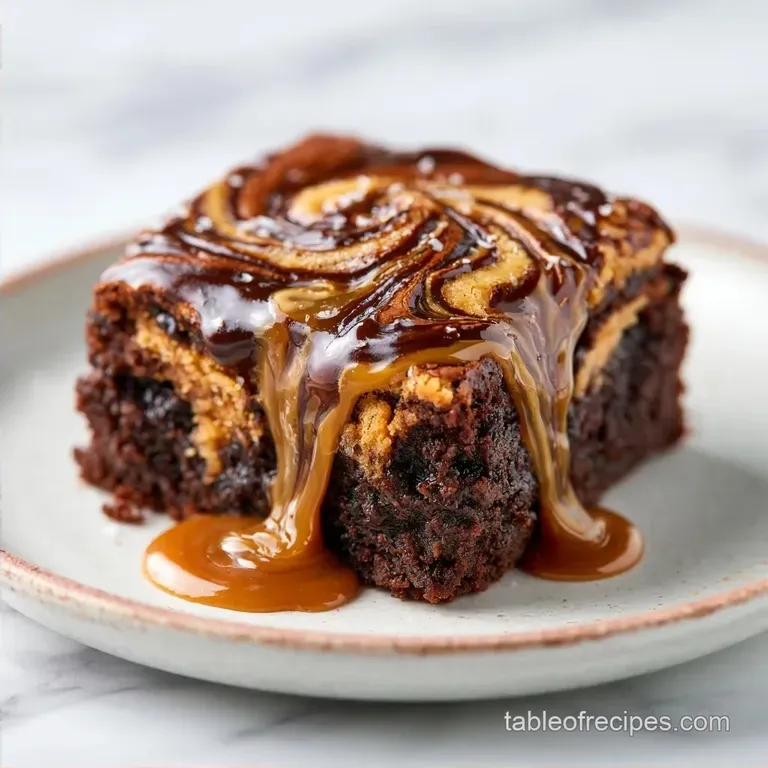
- Time: 20 min active + 1 hour cooling
- Flavor/Texture Hook: Fudgy cocoa with molten salty swirls
- Perfect for: Dessert parties or high calorie cravings
Salted Caramel Brookies
Ever wonder why some hybrid desserts just blend into one mushy layer? Most people just slap cookie dough on a brownie and hope for the best, but that usually leads to a cakey mess where you can't tell where the chocolate ends and the sugar begins.
I used to struggle with the "sink effect," where the heavy cookie dough would dive straight through the caramel and settle at the bottom of the pan. The fix isn't about luck, it's about controlling the density of the brownie foundation and the temperature of the fat in the cookie crown.
These Salted Caramel Brookies provide a clear structural divide. You get a dense, almost truffle like brownie bottom, a thin layer of molten gold, and a crisp edged chocolate chip cookie top. It's a precise study in contrasting textures.
Recipe Specs
Baking is chemistry, and these bars require specific timing to avoid overcooking the brownie while ensuring the cookie is set. We are targeting a specific internal temperature to keep the center fudgy.
- 1. Butter Browning
- Heat butter until it reaches 250°F (120°C) or turns a deep hazelnut color.
- 2. Internal Temp
- The center of the pan should read 190-200°F (88-93°C) when pulled from the oven.
- 3. Setting Time
- 60 minutes of cooling is mandatory for the caramel to stabilize.
Fresh vs Shortcut Comparison
| Component | Fresh Method | Shortcut Method | Outcome Difference |
|---|---|---|---|
| Butter | Browned Butter | Melted Butter | Browned adds nutty depth and better structure |
| Caramel | Warmed Sauce | Cold store-bought | Warm sauce swirls better without deflating brownie |
| Chocolate | Hand-cut Chunks | Standard Chips | Chunks create molten pools; chips stay round |
Ingredient Deep Dive
The success of this bake depends on the interaction between acidity and leavening. In the brownie base, we use cocoa powder, which is naturally acidic. This reacts with the sugar and eggs to create a dense, fudgy crumb rather than a cakey one.
For the top layer, brown sugar is the primary driver of texture. Because it contains molasses, it holds more moisture than granulated sugar, which creates that specific chewy pull. The browned butter further stabilizes this by removing water content, meaning the cookie doesn't spread too thin and swallow the caramel.
- Browned Butter
- Toasts milk solids for flavor and reduces water for a thicker dough.
- Brown Sugar
- Provides the chewy texture and a hint of molasses.
- Cocoa Powder
- Gives the base its deep, bitter chocolate profile.
- Baking Soda
- Reacts with brown sugar to provide a slight lift in the cookie layer.
- Flaky Sea Salt
- Breaks up the sugar intensity with sharp salt spikes.
Equipment Needed
Precision is key, and a few specific tools help eliminate the guesswork. A digital scale is the most vital piece of gear. Measuring flour by volume is inconsistent because packing density varies, which frequently results in dry, cakey brookies.
Essential Tools 9x9 inch square baking pan Parchment paper (for easy lifting) Digital kitchen scale Silicone spatula Fine mesh sifter Instant read thermometer
Bringing It Together
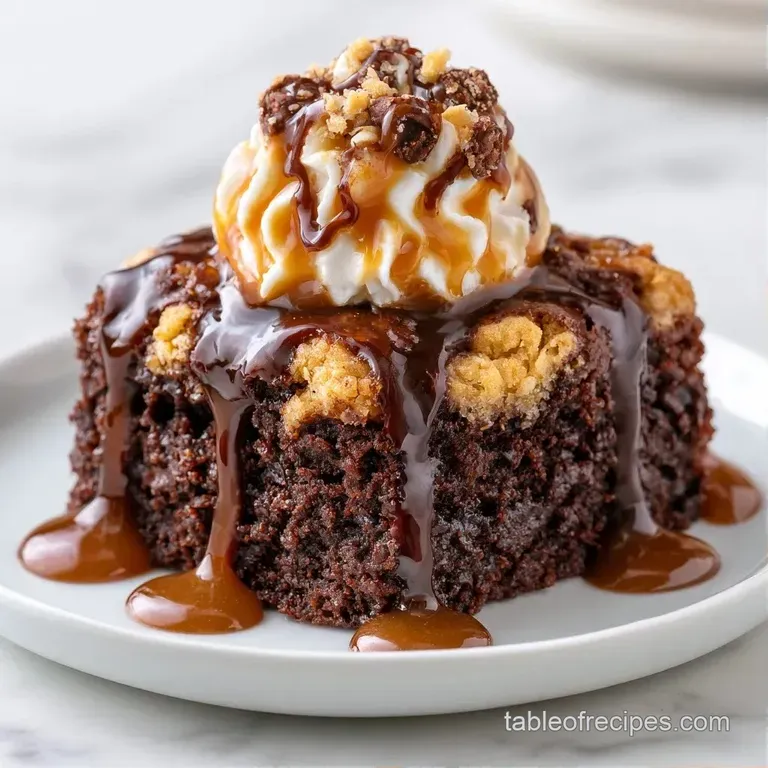
The process happens in three distinct phases. We build the foundation, add the molten center, and cap it with the dough.
Phase 1: The Brownie Foundation
- Heat oven to 350°F (175°C). Line a 9x9 inch pan with parchment paper, leaving a 2 inch overhang on the sides. Note: This allows you to lift the whole block out later.
- Whisk 115g melted butter and 200g granulated sugar in a bowl.
- Beat in 2 large eggs and 5ml vanilla extract until the batter looks glossy and smooth.
- Fold in 30g cocoa powder, 65g all purpose flour, and 1.5g salt. Use a spatula and stop as soon as the flour disappears.
- Spread the batter evenly into the bottom of the pan.
Phase 2: The Caramel Infusion
- Warm 115g salted caramel sauce in the microwave for 10-15 seconds until pourable.
- Drizzle the caramel in a spiral over the raw brownie batter.
- Swirl gently with a toothpick. Avoid over mixing or the caramel will blend into the chocolate.
- Sprinkle 3g flaky sea salt evenly over the swirls.
Phase 3: The Cookie Crown
- Cream 115g browned butter (cooled slightly) and 150g brown sugar until fluffy.
- Add 1 large egg and 5ml vanilla, beating until smooth.
- Sift in 155g all purpose flour, 3g baking soda, and 3g salt. Fold in 170g chocolate chunks.
- Drop rounded tablespoon sized dollops of dough across the caramel. Note: Do not spread the dough with a spoon, or you will push the caramel into the brownie.
- Bake 30-35 minutes until edges are golden brown and the center has a slight jiggle.
- Cool in the pan for 1 hour before slicing.
Pro Tips & Pitfalls
The most common issue is the "caramel sink," where the golden layer vanishes into the chocolate. This happens when the brownie batter is too thin or the caramel is too hot. By following the exact weights, the brownie base remains dense enough to support the weight of the cookie dough.
Another trap is overbaking. Because of the high sugar content, these bars continue to cook after they leave the oven. If you wait until the center is firm, you'll end up with a dry block. Pull them out when the center still wobbles slightly.
Fixing Mixed Layers
If your layers merge, it is usually due to over swirling the caramel or spreading the cookie dough. Use the dollop method to keep the structural integrity.
Preventing Overbaked Tops
If the cookies brown too quickly while the brownie is raw, tent the pan with foil for the last 10 minutes.
Stopping Caramel Leaks
Ensure the brownie batter is spread all the way to the edges of the pan to create a "seal" for the caramel.
| Problem | Root Cause | Solution |
|---|---|---|
| Caramel disappeared | Over swirling or thin batter | Swirl 2-3 times max; use a scale |
| Cookie top is cakey | Over mixing flour | Fold ingredients by hand, don't whisk |
| Center is too runny | Underbaked or not cooled | Cool for a full 60 minutes |
Flavor Variations to Try
Once you have the base method down, you can adjust the flavor profiles. For a more adult version, add 5g of instant espresso powder to the brownie batter. This doesn't make it taste like coffee, but it makes the chocolate taste more intense.
If you want to make Salted Caramel Pecan Brookies, toast 50g of pecans and fold them into the cookie dough. The crunch contrasts well with the molten caramel. For something totally different, if you want a colder treat, try a no bake ice cream dessert.
For those who prefer a variety of textures in one platter, these bars pair well with a small ice cream sandwich cake for a full dessert spread.
- For a fudgier base
- Bake 2 minutes less than the suggested time.
- For a crispier top
- Chill the cookie dough for 30 minutes before dolloping.
- For deeper salt
- Increase flaky sea salt to 5g.
Storage & Reheating
The high fat content and caramel ensure these Salted Caramel Brookies stay delicious. However, be aware that in warm kitchens, the caramel may soften too much at room temperature.
How to StoreFridge: Place in a sealed container for up to 5 days to keep the caramel set and the edges chewy. Freezer: Wrap individual bars in foil and parchment paper; they stay fresh for 3 months.
Reheating To recapture that "fresh from the oven" magic, microwave a bar for 10-15 seconds. This makes the caramel molten and softens the chocolate chunks.
Pro Tip Put any extra salted caramel sauce to use by stirring it into your morning coffee or drizzling it over apple slices.
Serving Suggestions
These are incredibly rich, so a small square is usually enough. To balance the intensity of the Salted Caramel Brookies, serve them with something acidic or cold.
- Cold
- A scoop of tart raspberry sorbet cuts through the fat of the browned butter.
- Drink
- A glass of cold oat milk or a bitter black coffee complements the cocoa.
- Plating
- Dust the top with a tiny bit of cocoa powder for a professional look.
Why These Ratios Work
The architectural integrity of Salted Caramel Brookies relies on a varied density gradient. The brownie base is the heaviest (with the least air), the caramel acts as a viscous liquid, and the cookie layer is the lightest, thanks to the baking soda.
The Brown Butter Advantage Toasting the butter removes moisture and caramelizes the milk solids. This results in a more stable dough that resists spreading, which prevents the caramel layer from being overwhelmed or "flooded."
Balancing Salt and Sweet Flaky sea salt is applied specifically to the caramel to create "salt spikes." These concentrated bursts of flavor prevent the palate from becoming fatigued by the high sugar content.
Textural Density The difference in flour, 65g for the brownie and 155g for the cookie, is a deliberate choice. This ensures the bottom stays fudgy while the top remains a true cookie, avoiding a uniform, indistinct texture.
- Myth
- "Adding more butter creates a chewier cookie."
- Truth
- Too much butter causes the dough to collapse and spread. The chewiness actually results from the brown sugar and avoiding over-mixing.
- Myth
- "Chilling the dough is essential for the best results."
- Truth
- Although chilling helps many recipes, the use of browned butter here provides enough stability to skip the refrigeration if you are in a rush.
Recipe FAQs
Is it safe to eat the raw brownie batter?
Actually, no. Raw flour and eggs can carry bacteria.
Tip: heat-treat your flour in the oven if you must taste the batter.
Can I bake these without parchment paper?
You can use a generous amount of butter or cooking spray.
Tip: using parchment allows you to lift the entire block out for cleaner cuts.
How to soften brookies that have gone stale?
Microwave a single bar for 10-15 seconds.
Tip: place a small cup of water in the microwave to keep the edges from drying out.
What happens if I omit the baking soda in the cookie layer?
The cookie portion will be denser and won't rise as much.
Tip: ensure your baking soda is fresh by bubbling it with a drop of vinegar.
Which desserts pair well with these bars?
These rich bars go great with a cold quick dessert for contrast.
Tip: serve with a dollop of unsweetened whipped cream to balance the caramel.
Do I need to use salted butter for the brownie base?
Stick with the unsalted butter listed in the recipe.
Tip: the salt comes from the sea salt and caramel sauce, so extra butter salt can overpower the flavor.
What can I do if the batch is overbaked?
Brush the tops with a light sugar syrup or drizzle extra caramel sauce over them.
Tip: serve them warmed up to soften the texture.
Is it true that the pan must be completely cooled before slicing?
No, and here's why. The caramel needs at least one hour to set or it will run everywhere.
Tip: refrigerate the pan for 30 minutes if you are in a rush.
Salted Caramel Brookies in 55 Minutes