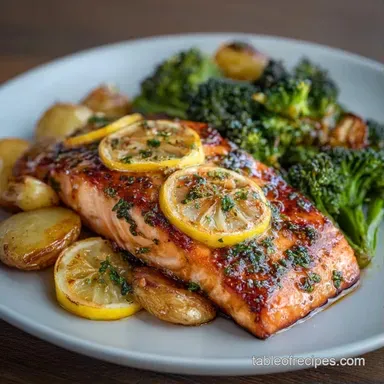
Roasted Sheet Pan Salmon: Garlic and Broccoli
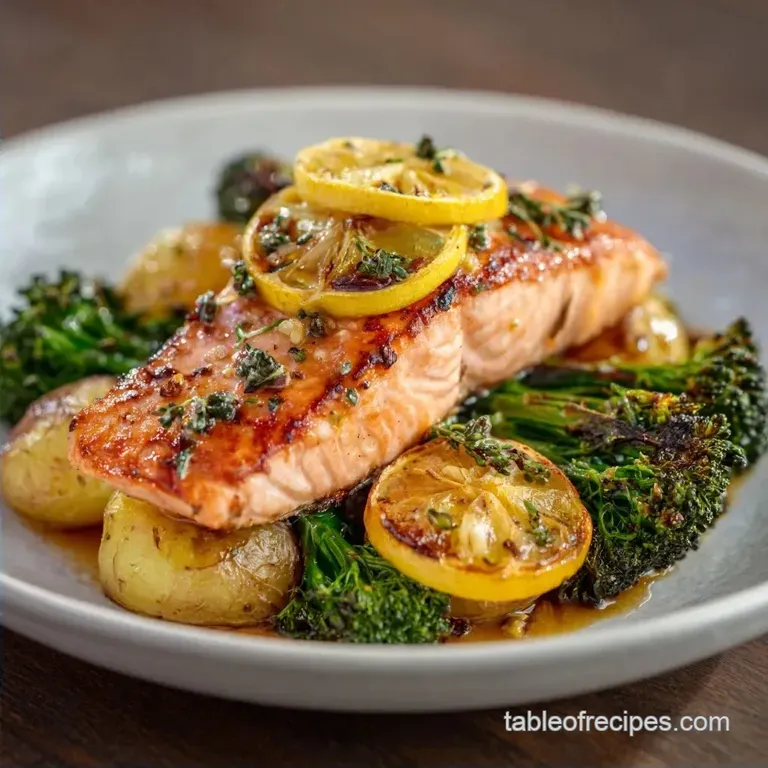
- Time: 10 min active + 20 min roasting
- Flavor/Texture Hook: Velvety salmon with a honey gold crust and charred broccoli edges
- Perfect for: High efficiency weeknight dinners for busy professionals
Roasted Sheet Pan Salmon
The smell of searing lemon and toasted garlic hitting a hot oven is my absolute favorite way to end a workday. For a long time, I thought "fancy" fish dinner meant spending an hour hovering over a pan, worrying about the skin sticking or the center staying raw.
But then I looked at how modern Mediterranean cooking has shifted towards these over high heat, one pan roasts. It's all about that efficiency, getting everything on one tray and letting the oven do the heavy lifting.
Honestly, my first few tries at this were a disaster. I used to throw everything in at once, and I'd end up with burnt broccoli and potatoes that felt like raw pebbles. It took me a while to realize that different ingredients have different "thermal densities," which is just a fancy way of saying some things take longer to heat through than others.
Once I staggered the start times, everything changed.
This Roasted Sheet Pan Salmon is the ultimate low effort, high reward meal. You get the richness of the fish, the earthiness of the potatoes, and the crunch of the broccoli, all without cleaning five different pots. It's a streamlined system that delivers a high flavor result without the tedious prep work.
Why the Timing Works
The secret here isn't the ingredients, it's the order of operations. Since we're using a high temperature of 200°C (400°F), the timing has to be precise.
- Staggered Entry: Potatoes have a dense structure and need a head start to soften and brown before the delicate salmon is added.
- Sugar Caramelization: The honey in the glaze creates a velvety crust through browning, but only if it's added toward the end so it doesn't burn.
- Steam Management: Using parchment paper prevents the fish from sticking and keeps the moisture from pooling, which stops the vegetables from getting soggy.
- Citrus Protection: The lemon slices act as a shield, keeping the top of the fillet moist while the heat penetrates the center.
Right then, before we dive into the ingredients, let's look at why the oven is the way to go here compared to a skillet.
| Feature | Stovetop Searing | Oven Roasting | Impact |
|---|---|---|---|
| Effort | High (constant flipping) | Low (set and forget) | Saves 15 mins active time |
| Texture | Crisp skin, risk of dry center | Velvety, consistent heat | More forgiving for beginners |
| Cleanup | Multiple pans and splatters | One lined sheet pan | 90% less scrubbing |
And that's the beauty of it. You aren't fighting with a frying pan; you're managing a process.
Essential Component Analysis
Before we get to the list, let's talk about what these ingredients actually do for the dish. Not everything is just for flavor; some are there for the "work."
| Ingredient | Science Role | Pro Secret |
|---|---|---|
| Honey | Browning agent | Adds a glossy sheen and balances the salt |
| Dijon Mustard | Emulsifier | Bonds the oil and honey into a thick glaze |
| Lemon Slices | Acidic moisture | Prevents the top of the fish from drying out |
| Olive Oil | Heat conductor | Ensures the potatoes crisp rather than steam |
The Shopping List
Grab these items. I've listed a few swaps if you're missing something in the pantry, but trust me, the Dijon is key for that specific tang.
- 4 Salmon fillets (6 oz each) Why this? Individual portions ensure even cooking times.
- 1 lb baby potatoes, halved or quartered Why this? Small size allows them to roast in under 20 minutes.
- 1 lb broccoli florets, bite sized Why this? High surface area creates those charred, crispy edges.
- 1 lemon, sliced into rounds
- 3 garlic cloves, minced
- 3 tbsp olive oil
- 1 tbsp Dijon mustard Why this? Adds a sharp depth that cuts through the fatty salmon.
- 1 tbsp honey
- 1 tsp dried oregano
- 1/2 tsp salt
- 1/4 tsp black pepper
Quick Ingredient Swaps:
| Original Ingredient | Substitute | Why It Works |
|---|---|---|
| Baby Potatoes | Parsnips or Carrots | Similar density. Note: May need 2-3 mins extra roast time |
| Broccoli | Asparagus | Similar cook time. Note: Add at the same time as salmon |
| Honey | Maple Syrup | Similar sugar profile. Note: Adds a slightly woodier flavor |
| Dijon Mustard | Whole Grain Mustard | Same acidity. Note: Texture is chunkier, flavor is milder |
I usually keep a bag of frozen broccoli in the freezer for this. Just make sure it's fully thawed and patted dry with a paper towel, or you'll end up with a watery mess on your pan.
Gear for the Job
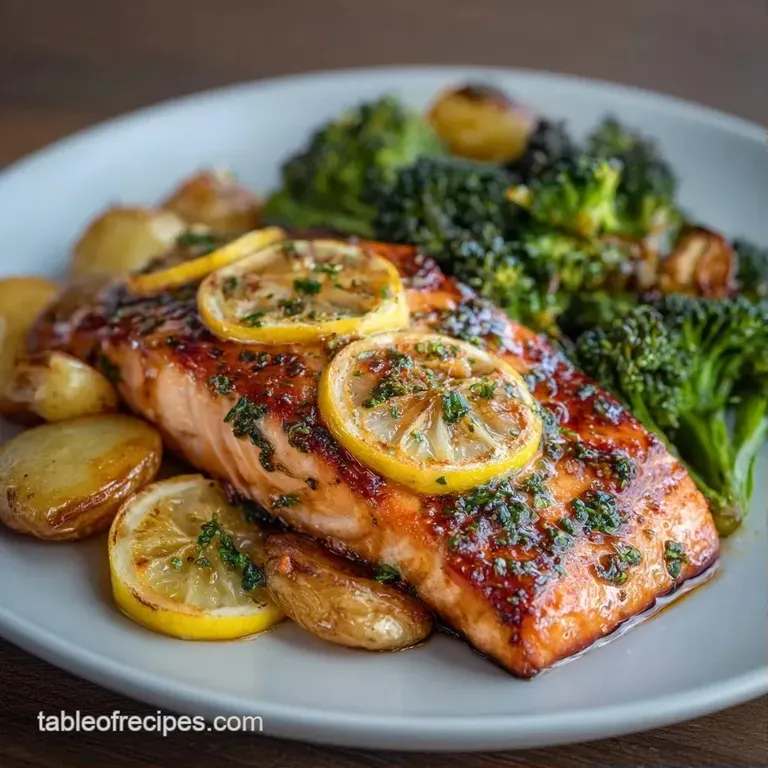
You don't need a professional kitchen for this, but a few things make it way smoother.
- Large Rimmed Sheet Pan: Make sure it's big enough that the salmon and veggies aren't touching too much. Crowding leads to steaming, not roasting.
- Parchment Paper: This is non negotiable. It saves your pan and ensures the honey glaze doesn't turn into cement.
- Small Mixing Bowl: For whisking the glaze.
- Pastry Brush: To get that velvety coating on the fish.
Chef's Tip: If you want a deeper flavor, try adding a pinch of smoked paprika to the potato toss. It gives them a "grilled" vibe without the charcoal.
Steps for Success
Let's crack on. Follow these steps exactly to hit that 30 minute total time.
- Preheat your oven to 400°F (200°C) and line your large rimmed sheet pan with parchment paper.
- Toss the halved potatoes with 1 tbsp olive oil, salt, and pepper. Spread them in a single layer and roast for 12-15 minutes until the edges start to brown.
- While the potatoes are roasting, whisk together the remaining 2 tbsp olive oil, Dijon mustard, honey, minced garlic, and dried oregano in a small bowl.
- Remove the pan from the oven and push the potatoes to the edges to make room in the center.
- Place the salmon fillets and broccoli florets in the center of the pan.
- Brush the glaze generously over each fillet and drizzle the remaining mixture over the broccoli.
- Top each salmon fillet with a single lemon slice.
- Return the pan to the oven and roast for 10-12 minutes until the salmon is opaque and flakes easily with a fork.
Solving Common Issues
Even with a simple Roasted Sheet Pan Salmon, things can go sideways if the heat isn't behaving.
Why Your Salmon is Dry
This usually happens because of fillet thickness. A 6 oz fillet is standard, but if yours are thinner, they'll overcook in 8 minutes. Use a fork to check for flakiness early. If you're looking for other ways to keep fish moist, my clean eating salmon dinner focuses on very short cook times.
Why Your Broccoli is Mushy
This happens when the vegetables are crowded or the oven isn't hot enough. Ensure there is space between the florets so the air can circulate and sizzle the edges.
| Problem | Root Cause | Solution |
|---|---|---|
| Potatoes still hard | Cut too large | Quarter them into 1 inch pieces |
| Glaze burnt | Oven too hot/too long | Check salmon at 10 min mark |
| Fish sticking | No parchment/too little oil | Use parchment and brush fillets |
Mistake Checklist:
- ✓ Potatoes are cut to a uniform size.
- ✓ Pan is not overcrowded (air can flow).
- ✓ Oven is fully preheated to 200°C (400°F).
- ✓ Salmon was patted dry before glazing.
Creative Flavor Twists
Once you've got the basic flow down, you can treat this as a template. The beauty of the sheet pan is that you can swap the "garden" and the "glaze" without changing the timing.
The Veggie Swap: If you're bored of broccoli, try Brussels sprouts (halved) or cauliflower. Both have a similar density and can handle the 10-12 minute final roast. For something lighter, go with asparagus, but only add them in the final 8 minutes so they don't turn to mush.
The Glaze Swap: For a more Mediterranean vibe, swap the honey for a squeeze of orange juice and add a pinch of cumin. If you want some heat, whisk in a teaspoon of Sriracha or chipotle paste. If you're planning a larger meal, this pairs great with my Salmon Dinner for 4 recipe variations.
Decision Shortcut: If you want more crunch, roast the broccoli for 2 minutes longer before adding the salmon. If you want more tang, double the lemon slices and add a splash of apple cider vinegar to the glaze.
If you want earthier tones, swap oregano for fresh thyme or rosemary.
Storage and Leftovers
This Roasted Sheet Pan Salmon is best eaten fresh, but it's actually a great meal prep option if you handle it right.
Fridge Storage: Store the salmon and vegetables in an airtight container for up to 3 days. The potatoes might lose some of their crispness, but the salmon stays velvety.
Freezing: I don't recommend freezing the cooked vegetables as they become watery. However, you can freeze the cooked salmon fillets wrapped in foil for up to 2 months. Thaw in the fridge overnight before reheating.
Reheating Tips: Avoid the microwave if you can. It makes the salmon rubbery. Instead, pop the leftovers in an air fryer or toaster oven at 180°C (350°F) for 5 minutes. This brings back the sizzle to the potatoes and the glisten to the fish.
Zero Waste: Don't toss the lemon rinds or the broccoli stems! Peel the stems, slice them thinly, and toss them in with the potatoes at the start. They roast beautifully and taste like mini carrots. Save the lemon rinds in a jar of vodka or sugar for later use in baking.
Ideal Pairing Ideas
Since this is a complete meal with a protein, a starch, and a veggie, you don't need much else. But if you're hosting or just feeling extra hungry, a few additions make it feel like a restaurant dish.
A side of quinoa or a simple arugula salad with a lemon olive oil dressing cuts through the richness of the salmon. I also love serving this with a dollop of Greek yogurt mixed with dill and cucumber on the side for a cool contrast to the hot roast.
If you're making this for a crowd, I suggest prepping the glaze and chopping the veggies a few hours ahead. Keep them in separate containers in the fridge. When it's time to eat, just toss, roast, and serve. It turns a "big meal" into a 30 minute operation.
Right then, that's the whole system. It's fast, it's efficient, and it tastes like you spent way more time on it than you actually did. Now, get that oven preheating and let's get cooking!
Recipe FAQs
How do you cook salmon in the oven?
Preheat to 400°F and roast on a sheet pan. Roast potatoes for 12-15 minutes first, then add the salmon and broccoli to the pan and roast for an additional 10-12 minutes.
How to cook moist salmon in the oven?
Roast for only 10-12 minutes. Remove the fillets from the oven as soon as they become opaque and flake easily with a fork to prevent them from drying out.
Can I bake salmon steaks instead of fillets?
Yes, steaks work well. Just ensure they are a similar thickness to the fillets so the 10-12 minute roasting time remains effective.
How to cook salmon cheaply and easily?
Use a single sheet pan for the entire meal. Combining the protein with affordable baby potatoes and broccoli minimizes both cleanup and grocery costs.
Is it true that salmon must be cooked for 20 minutes to be safe?
No, this is a common misconception. At 400°F, fillets typically only need 10-12 minutes to be fully cooked and tender.
What can I use if I don't have lemon?
Skip the slices or use a small amount of vinegar. The Dijon mustard in the glaze provides enough acidity to balance the flavors without the fresh fruit.
What are the best sides to serve with this salmon?
The included roasted potatoes and broccoli are the best choice. If you want more variety, these fillets pair perfectly with garlic baby potatoes.
Roasted Sheet Pan Salmon