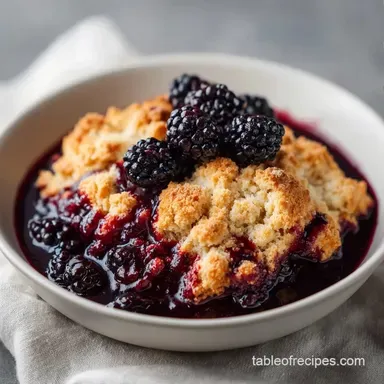
Old Fashioned Blackberry Cobbler: with Butter
- Time: 20 min active + 60 min baking
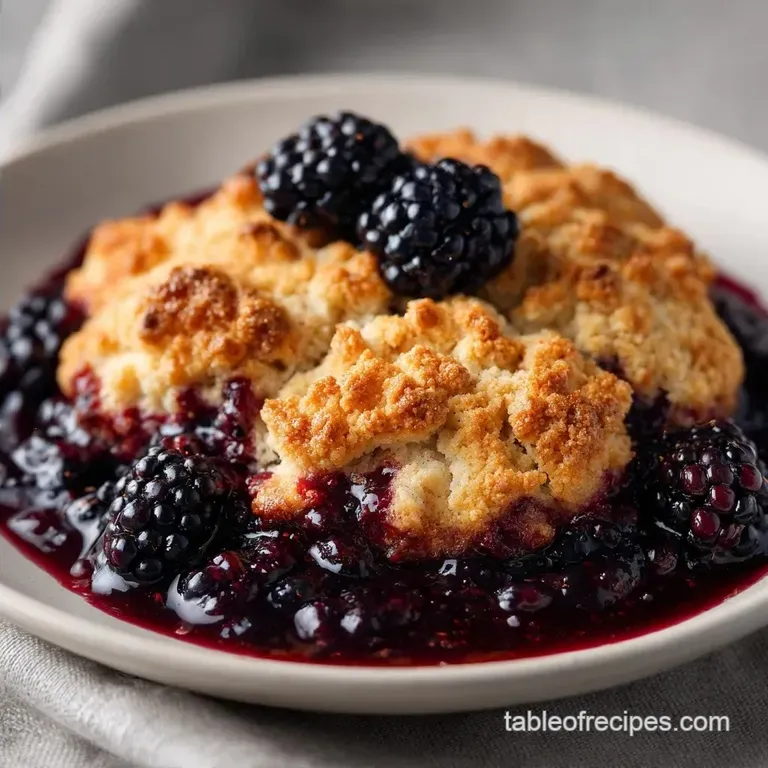
- Flavor/Texture Hook: Jammy, bubbling berries under a golden, cake like crust
- Perfect for: Summer gatherings or a cozy weekend treat
The smell of bubbling blackberries and melted butter hitting a hot oven is honestly one of the best scents in the world. But let's be real, most home cooks struggle with the "soggy bottom" syndrome.
You pull your dessert out, and instead of a distinct crust, you have a purple puddle that collapses the moment you scoop into it.
The problem usually comes down to moisture control and the order of operations. If you mix the berries into the batter, you get a muffin; if you put the berries on the bottom without a thickener, you get a stew.
My approach fixes this by layering. We create a butter base, add a precise batter, and then top it with berries that have been coated in a cornstarch slurry. This ensures your Blackberry Cobbler has a defined structure and a crust that actually holds its weight.
Blackberry Cobbler
The goal here is a specific balance of acidity from the lemon and sweetness from the sugar. When these hit the heat, the pectin in the blackberries works with the cornstarch to create a thick, glossy sauce. It’s a precise chemical reaction that turns raw fruit into a cohesive filling.
I used to eyeball the flour, but that's where things go wrong. Too much flour makes the topping rubbery, while too little means it won't rise enough to support the berries. By weighing the ingredients, we remove the guesswork and ensure the crumb is tender every single time.
If you're looking for a variation, you might like my [Blackberry Cobbler for 6 recipe](https://tableofrecipes.com/recipes/simple baked-blackberry cobbler/) which uses a slightly different crust ratio for a denser feel.
Why the Ratios Matter
Cornstarch Ratio: Using 16g of cornstarch for 600g of berries creates a stable gel that traps fruit juices without making the filling taste like paste.
The Butter Base: Melting butter in the bottom of the pan creates a fried effect on the lower layer of batter, preventing it from sticking and adding a rich, toasted flavor.
Leavening Balance: The 7g of baking powder provides enough lift to push through the weight of the heavy berries, creating those characteristic "cobble" peaks.
| Method | Prep Time | Texture | Best For |
|---|---|---|---|
| Fast Mix | 10 mins | Denser, more cake like | Weeknight cravings |
| Classic Layer | 20 mins | Airy crust, jammy base | Dinner parties |
What Each Ingredient Does
| Ingredient | What It Does | Best Swap |
|---|---|---|
| Fresh Blackberries | Provides the primary acid and bulk | Frozen berries (thaw first) |
| Cornstarch | Thickens the fruit juices | Arrowroot powder |
| Baking Powder | Creates the lift in the crust | Self rising flour (omit powder/salt) |
| Whole Milk | Hydrates the flour for a tender crumb | Buttermilk (adds tang) |
Gear for the Bake
You don't need a professional kitchen for this, but a few specific tools help with precision. I always use a digital scale because "one cup" of flour can vary by 20 grams depending on how you scoop it.
A 9x13-inch baking dish is the standard for this recipe. If you use a deeper, smaller dish, the center of the Blackberry Cobbler might stay doughy while the edges burn.
For the batter, a medium whisk is better than a fork. You want to incorporate the milk quickly without overworking the gluten, which would make the topping tough.
Making the Cobbler
- Preheat your oven to 350°F (175°C). Note: Ensure the rack is in the center for even heat distribution.
- In a large bowl, whisk together 1/2 cup sugar, 2 tbsp cornstarch, and 1/4 tsp cinnamon.
- Fold in 4 cups of fresh blackberries and 1 tbsp lemon juice, tossing gently until every berry is coated.
- Place 1/2 cup unsalted butter in a 9x13-inch baking dish and melt it in the oven or microwave.
- In a medium bowl, whisk together 1 cup flour, 3/4 cup sugar, 1 1/2 tsp baking powder, and 1/4 tsp salt.
- Stir in 3/4 cup whole milk until just combined, leaving a few small lumps for texture.
- Pour the batter directly over the melted butter in the dish; do not stir the layers.
- Spoon the blackberry mixture over the batter and drizzle with the remaining 6 tbsp of melted butter.
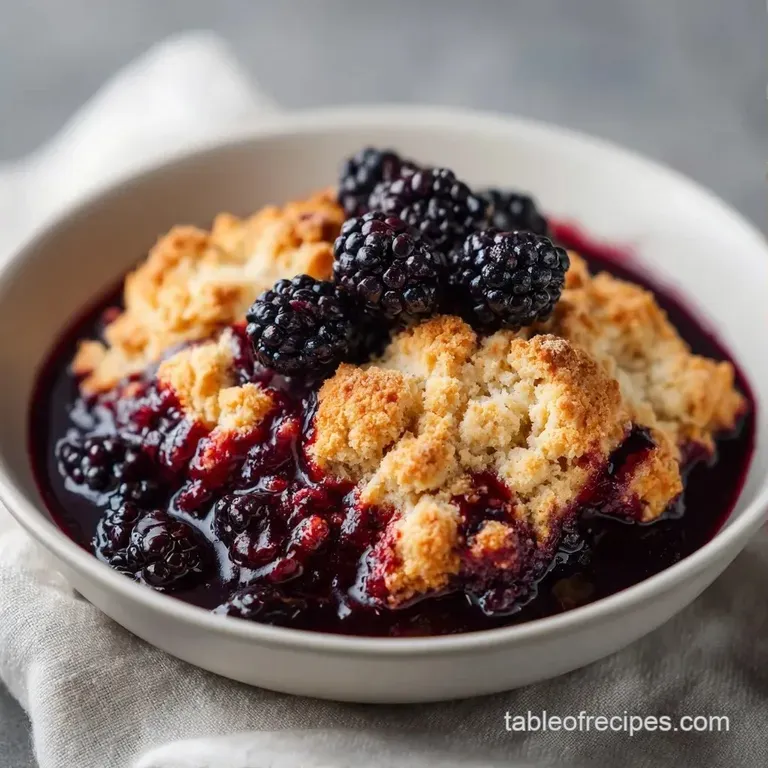
- Bake for 60 minutes until the crust is golden brown and the berries are bubbling.
Chef's Note: If you see the edges browning too fast at the 40 minute mark, loosely tent the top with foil. This allows the center to finish cooking without burning the peaks.
Fixing Texture Problems
The most common issue with a Blackberry Cobbler is a filling that remains too liquid. This usually happens if the berries were over ripe or if the cornstarch wasn't fully incorporated.
Another frequent problem is a "sunken" crust. This happens when the batter is over mixed, which develops too much gluten, or if the baking powder is expired and fails to provide the necessary lift.
Why Your Filling Is Runny
If the sauce doesn't thicken, you likely have too much moisture. This is common when using frozen berries that release extra water during the thaw.
| Problem | Root Cause | Solution |
|---|---|---|
| Liquid Filling | Low cornstarch or extra berry juice | Increase cornstarch by 1 tsp next time |
| Doughy Center | Oven temp too high or pan too deep | Use a wider dish; check internal temp |
| Pale Crust | Not enough melted butter on top | Drizzle extra butter in last 10 mins |
Changing the Ingredients
You can easily pivot this recipe if you have dietary restrictions. For a gluten-free version, a 1:1 GF baking flour blend works well, though the crust will be slightly more fragile.
If you want a dairy-free Blackberry Cobbler, replace the butter with a high fat vegan butter stick and use full fat coconut milk. The coconut milk adds a slight tropical note that actually complements the tartness of the blackberries.
For those who prefer a different fruit profile, you can swap half the blackberries for blueberries or raspberries. Just keep the cornstarch ratio the same to ensure the sauce sets correctly. If you enjoy this style of fruit dessert, you might also like my Blackberry Cobbler recipe for an even more substantial topping.
| Original Ingredient | Substitute | Why It Works |
|---|---|---|
| Whole Milk | Almond Milk | Works for flavor, but slightly less browning |
| Fresh Berries | Frozen Berries | Same flavor; Note: Must drain excess liquid |
| Granulated Sugar | Coconut Sugar | Earthier taste, similar structure |
Fact Checking the Bake
Some people think you need to pre cook the berries on the stove to prevent sogginess. This isn't true. As long as you use cornstarch and the correct baking time, the oven provides enough heat to thicken the sauce.
Another myth is that you should stir the batter into the butter. Don't do this. The beauty of the butter bottom method is the separation of layers. Stirring creates a homogenous cake rather than a layered cobbler.
Storing Your Leftovers
Store any remaining Blackberry Cobbler in an airtight container in the fridge for up to 4 days. The crust will soften slightly as it absorbs some of the berry juices, which some people actually prefer.
For long term storage, you can freeze individual squares. Wrap them tightly in plastic wrap and then foil. They'll stay good for about 2 months in the freezer.
To reheat, avoid the microwave if you want the crust to stay crisp. Put a slice in a 300°F (150°C) oven for 10-15 minutes.
To reduce waste, if you have leftover berries that are too mushy for the cobbler, simmer them down with a bit of sugar to make a quick compote for pancakes.
Ways to Serve It
The classic pairing is a scoop of high-quality vanilla bean ice cream. The cold cream cuts through the tartness of the berries and balances the heat of the dish.
For a more sophisticated twist, try a dollop of crème fraîche or a drizzle of heavy cream infused with a bit of lemon zest. This highlights the citrus notes in the filling.
If you're serving this for a brunch, a side of fresh mint leaves and a sprinkle of powdered sugar adds a nice visual contrast. Because this is a Blackberry Cobbler with Butter, it's rich enough to stand on its own, but these additions make it feel like a restaurant dessert.
Whether you're making a Traditional Blackberry Cobbler for a family reunion or just a Quick Blackberry Cobbler for yourself, focusing on the weights and the layering is what makes the difference. Once you stop eyeballing the flour and start trusting the ratios, you'll never go back to the "guess and check" method.
Recipe FAQs
Do you use salted or unsalted butter for blackberry cobbler?
Use unsalted butter. This allows you to control the salt levels precisely using the 1/4 tsp of salt required in the batter.
What is the difference between blackberry crisp and blackberry cobbler?
Cobblers have a cake like or biscuit batter topping. Crisps use a crumbly mixture of oats, flour, and butter instead of a cohesive batter.
What is the difference between cobbler and pie?
Cobblers feature a dropped batter topping rather than a pastry crust. Unlike pies, which have a bottom and often a top crust made of rolled dough, cobblers are more rustic.
How do you know when a cobbler is done?
Bake for 60 minutes until the crust is golden brown and berries are bubbling. Check for a firm set in the batter and a deep gold color on top.
What are some common mistakes to avoid when making cobblers?
Avoid over mixing the batter. Stir the milk until just combined to keep small lumps, which ensures the texture remains tender.
What is your secret for a great cobbler?
Pour the batter directly over melted butter without stirring. This creates a rich, caramelized bottom crust. If you enjoyed this method of layering textures, see how we use a similar approach to contrast creamy and crisp elements in our creme brulee cheesecakes.
Is it true that a blackberry cobbler only requires three ingredients?
No, this is a common misconception. A proper cobbler requires a variety of components, including berries, cornstarch, flour, sugar, butter, and milk to achieve the correct structure and flavor.
Old Fashioned Blackberry Cobbler