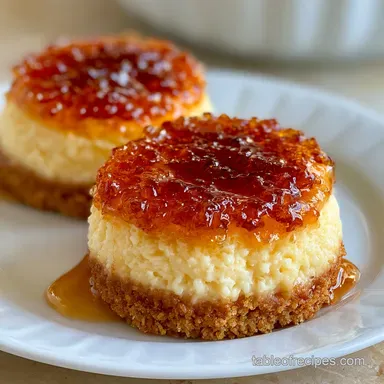
Mini Creme Brulee Cheesecake Bites: Lighter Version
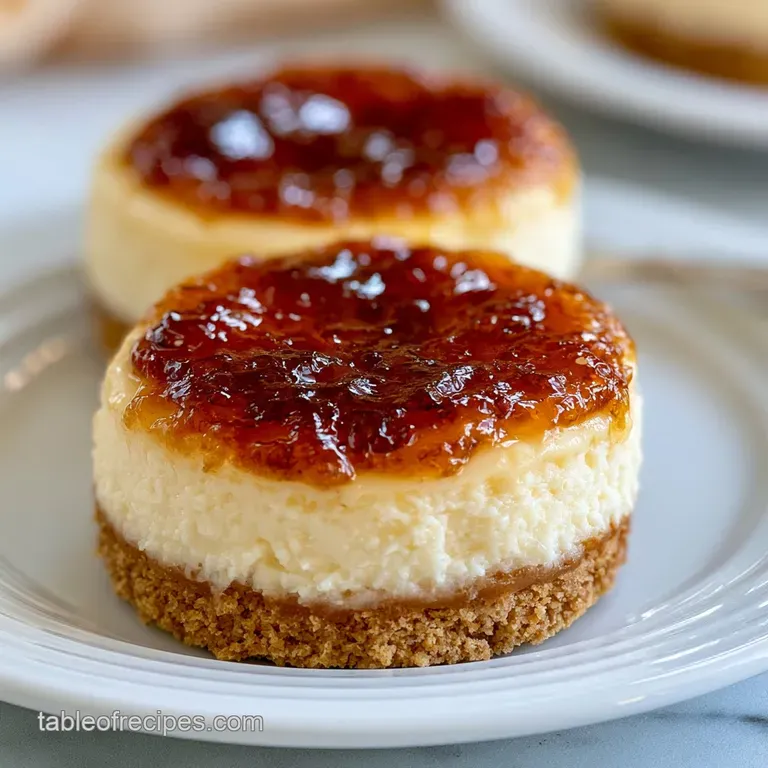
- Time: 25 min active + 4 hours 15 mins chilling/baking = Total 4 hours 40 mins
- Flavor/Texture Hook: Brittle, shattered sugar topping over a silky, tangy filling
- Perfect for: Dinner party finales or high end dessert platters
- Guide to Mini Creme Brulee Cheesecakes
- How the Texture Works
- Component Analysis
- Required Ingredients List
- Necessary Kitchen Tools
- Step-by-Step Baking Process
- Solving Common Issues
- Troubleshooting Common Issues
- Alternative Ingredient Swaps
- Adjusting Batch Sizes
- Dessert Myths
- Storage and Waste Tips
- Best Dessert Pairings
- Recipe FAQs
- 📝 Recipe Card
The scent of caramelized sugar is unmistakable, a sharp, toasted aroma that fills the room the second the torch hits the surface. There is something deeply satisfying about that first crack as the spoon breaks through the amber glass into the cool, velvety cheesecake below.
It is the contrast of temperatures and textures that makes this dessert stand out.
I remember a specific evening when I tried to rush these by cranking the oven temperature to 350°F, thinking I could save ten minutes. The result was a disaster, a series of cracked tops and a grainy texture that felt more like a scrambled egg than a cheesecake.
That mistake taught me that precision in temperature is the only way to ensure the proteins in the cheese set without expanding too quickly.
Once I slowed down and respected the chemistry of the batter, the results became consistent. These mini creme brulee cheesecakes are not about guesswork, they are about control. By managing the air incorporated into the batter and the exact heat of the torch, you get a dessert that looks like it came from a professional pastry kitchen.
Guide to Mini Creme Brulee Cheesecakes
The goal here is a balanced profile. We want the tang of the Greek yogurt to cut through the richness of the cream cheese, while the burnt sugar provides a bitter edge to offset the sweetness.
This recipe removes the volatility of a full sized cheesecake by using a smaller volume, which allows for faster cooling and a more stable set.
When you're assembling these, the focus should be on the "shatter" effect. If the sugar is too thick, it becomes a hard candy shell that is difficult to eat. If it's too thin, it dissolves into the filling. A precise, thin layer of caster sugar is the key to that glass like finish.
How the Texture Works
To get this right, we have to look at the structural components of the filling. It is not just about mixing ingredients, it is about managing the emulsion.
- Protein Stability: The combination of low-fat cream cheese and strained Greek yogurt creates a dense network of proteins that holds moisture without becoming runny.
- Air Control: Mixing the egg on low speed prevents the incorporation of large air bubbles, which would otherwise expand in the oven and cause the surface to collapse.
- Sugar Grain Size: Caster sugar has smaller crystals than granulated sugar, allowing it to melt evenly and quickly under the torch without overheating the cheesecake underneath.
- Acidity Balance: The lemon juice lowers the pH slightly, which brightens the flavor and helps stabilize the dairy proteins during the bake.
| Method | Texture | Prep Effort | Best For |
|---|---|---|---|
| Torch (Fresh) | Brittle, Glassy | Medium | High end presentation |
| Broiler (Shortcut) | Softer, Uneven | Low | Quick home treats |
| Blowtorch (Precision) | Consistent Amber | Medium | Total control |
Component Analysis
Understanding why these specific ingredients are chosen helps in avoiding common errors.
| Ingredient | Science Role | Pro Secret |
|---|---|---|
| Greek Yogurt | Hydration & Tang | Use strained (thick) yogurt to avoid excess moisture |
| Honey | Crust Binder | Acts as a humectant to keep the crust from becoming sandy |
| Caster Sugar | Rapid Melting | Its fine texture ensures a thin, even caramelization |
| Lemon Juice | Flavor Bridge | Cuts through the fat of the cream cheese for a cleaner finish |
Required Ingredients List
For the best results, ensure your cream cheese is truly at room temperature to avoid lumps.
For the Crust:
- 1/2 cup (60g) graham cracker crumbsWhy this? Provides a salty, toasted base
- 2 tbsp (28g) melted butterWhy this? Binds crumbs into a cohesive layer
- 1 tbsp (21g) honeyWhy this? Adds a hint of floral sweetness and stickiness
- 1 pinch (1g) saltWhy this? Enhances all other flavors
- Substitute: Use crushed digestive biscuits if graham crackers are unavailable (slightly more oat like flavor)
For the Filling:
- 8 oz (225g) low-fat cream cheeseWhy this? Provides the core structure
- 1/4 cup (60g) plain Greek yogurt, strainedWhy this? Adds a velvety, tangy lightness
- 1/3 cup (65g) granulated cane sugarWhy this? Standard sweetness for the base
- 1 large (50g) eggWhy this? Sets the structure during baking
- 1 tsp (5ml) vanilla extractWhy this? Classic aromatic profile
- 1/2 tsp (2g) lemon juiceWhy this? Prevents the flavor from feeling "flat"
- Substitute: Use sour cream instead of Greek yogurt (richer, less tangy)
For the Topping: - 1/4 cup (50g) superfine caster sugar Why this? Melts rapidly and evenly - Substitute: Pulse regular granulated sugar in a blender for 5 seconds (almost identical result)
Necessary Kitchen Tools
You don't need a lab, but a few specific tools make this process foolproof. A mini muffin pan is essential for the size, and while a blowtorch is preferred, a broiler can work in a pinch.
Chef's Note: If you're using a blowtorch, keep the flame moving in constant circles. If you hover in one spot for more than two seconds, you'll burn the sugar into a bitter charcoal instead of a golden amber.
Step-by-step Baking Process
Precision is everything here. Follow these steps exactly to avoid the common pitfalls of cheesecake baking.
- Combine graham crumbs, melted butter, honey, and salt in a small bowl. Mix until the texture resembles wet sand.
- Spoon roughly 1 tablespoon of the crust mixture into each of the 12 mini muffin liners. Press firmly with the back of a spoon to create a flat, compact base.
- Beat the softened low-fat cream cheese and granulated cane sugar. Mix until the batter is smooth and aerated, ensuring no lumps remain.
- Gently fold in the strained Greek yogurt, vanilla extract, and lemon juice using a spatula.
- Add the egg and mix on low speed just until combined. Note: Over mixing here introduces air that causes cracks.
- Divide the batter evenly among the prepared crusts, filling them nearly to the top.
- Bake at 325°F (160°C) for 12-15 minutes until edges are set but centers still wobble slightly.
- Cool completely on the counter, then refrigerate for at least 4 hours to allow the structure to set.
- Sprinkle a thin, even layer of caster sugar over the top of each chilled cheesecake.
- Use a kitchen blowtorch in circular motions to caramelize the sugar until deep amber gold. Let sit for 2 minutes to harden into a shell.
Solving Common Issues
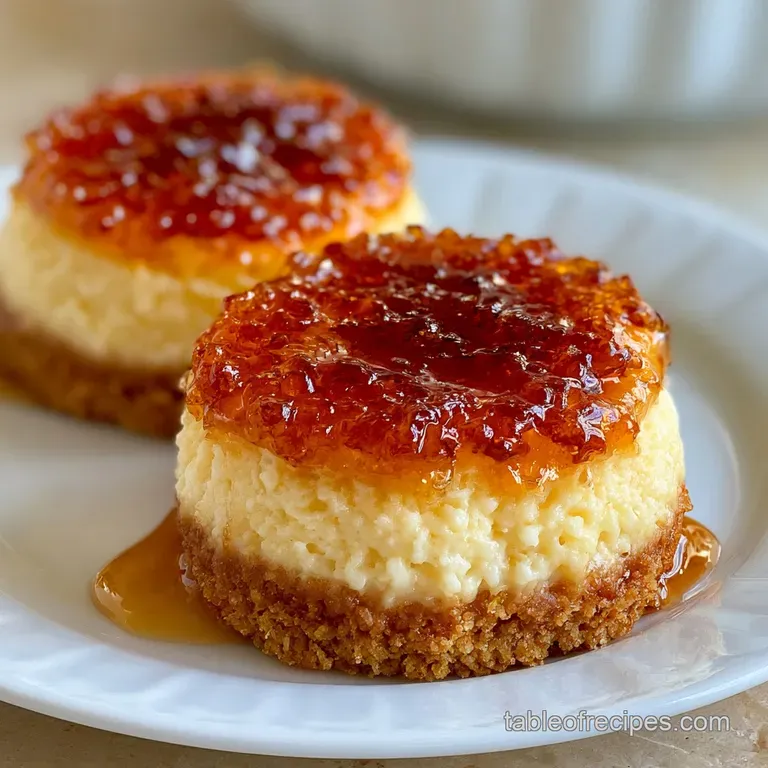
Even with a precise recipe, variables like humidity or oven calibration can interfere. If you're looking for other dessert ideas, you might enjoy my Mississippi Mud Cake recipe for something more chocolate heavy.
Troubleshooting Common Issues
| Issue | Solution |
|---|---|
| Why Your Topping Is Sticky | If the sugar doesn't harden into a glass like shell, it's usually because the sugar was applied too thickly or the torch didn't reach the melting point. According to [Serious Eats](https://www.serious |
| Why Your Filling Cracked | Cracks happen when the cheesecake expands too rapidly in the oven. This is caused by either too much air in the batter or an oven temperature that is too high. The wobble in the center is your cue to |
| Why Your Crust Crumbles | A crumbling crust usually means there wasn't enough binder (butter or honey) or the crumbs weren't pressed firmly enough. Ensure you use the back of a spoon to really pack the mixture into the liner. |
Common Mistakes Checklist
- ✓ Did you use room temperature cream cheese? (Prevents lumps)
- ✓ Did you strain the Greek yogurt? (Prevents watery filling)
- ✓ Did you stop baking while the center still wobbled? (Prevents overcooking)
- ✓ Did you chill for the full 4 hours? (Ensures the sugar doesn't melt the cake)
- ✓ Is your sugar layer thin and even? (Ensures a clean shatter)
Alternative Ingredient Swaps
Depending on your dietary needs, you can adjust this recipe, though the texture will change slightly. If you prefer something with a different chew, my Coconut Macaroons are a great alternative.
| Original Ingredient | Substitute | Why It Works |
|---|---|---|
| low-fat Cream Cheese | Full fat Cream Cheese | Richer taste. Note: Denser texture, may need 2 extra mins bake time |
| Graham Crumbs | Almond Flour + Sugar | gluten-free. Note: More fragile crust, requires more honey |
| Cane Sugar | Maple Syrup | Natural sweetness. Note: Adds moisture; reduce yogurt by 1 tbsp |
Adjusting these proportions requires a bit of care to maintain the emulsion. If you're switching to full fat cheese, the cake will be more decadent but slightly less tangy.
Adjusting Batch Sizes
When changing the volume of this recipe, you cannot simply multiply everything and expect the same result.
Scaling Down (1/2 batch):
- Use a 6 slot mini muffin tin.
- Reduce baking time by about 20% (check at 10 minutes).
- Since you can't use half an egg easily, beat one egg in a bowl and measure out 25g.
Scaling Up (2x batch):
- Work in batches if your mixer is small to avoid over aerating the batter.
- Lower the oven temperature to 300°F (150°C) and extend the time by 3-5 minutes to ensure even heat distribution across two pans.
- Increase salt and vanilla to 1.5x rather than 2x to keep the flavors balanced.
Dessert Myths
Myth: You must use a water bath for all cheesecakes. For these mini creme brulee cheesecakes, a water bath is unnecessary. The small volume allows heat to penetrate the center quickly enough that the edges won't overcook before the middle sets.
Myth: low-fat cream cheese ruins the texture. Not if you balance it. By adding strained Greek yogurt, you replace the lost fat with a creamy, protein rich alternative that actually improves the "melt in-your mouth" quality.
Storage and Waste Tips
These treats are best served fresh, but they keep well if handled correctly.
Storage Guidelines: Store these in an airtight container in the fridge for up to 4 days. However, do not torch the sugar until you are ready to serve. If you torch them and then put them in the fridge, the sugar shell will absorb moisture and turn into a sticky syrup.
Zero Waste Tips:
- Graham Scraps: If you have leftover crumbs, mix them with a bit of melted butter and use them as a topping for yogurt or oatmeal.
- Yogurt Drips: Use any leftover Greek yogurt in your morning smoothie or as a base for a savory dip with cucumber and dill.
- Egg Whites: If you use only the yolk for some variations, save the whites to make a light meringue.
Best Dessert Pairings
Because these mini creme brulee cheesecakes are rich and sweet, they pair best with elements that provide acidity or bitterness.
Fresh raspberries or a tart blackberry coulis provide a sharp contrast to the creamy filling. A sprig of fresh mint adds a clean, herbal note that refreshes the palate between bites. For a drink pairing, a strong espresso or a glass of chilled dessert wine like Sauternes complements the burnt sugar topping perfectly.
Recipe FAQs
Can I serve these immediately after baking?
No, they must be chilled. Refrigerate the cheesecakes for at least 4 hours to ensure the filling sets completely.
How to get the sugar topping to harden into a shell?
Apply a thin, even layer of caster sugar. Use a kitchen blowtorch in circular motions until the sugar is deep amber gold, then let it sit for 2 minutes.
Why did the tops of my mini cheesecakes crack?
You likely incorporated too much air or used too high a temperature. Mix the egg on low speed just until combined to prevent air bubbles from expanding too rapidly.
How long can I store these in the refrigerator?
Store them for up to 4 days. Place the bites in an airtight container to maintain their texture and flavor.
Is it true that low-fat cream cheese is the only option for this recipe?
No, this is a common misconception. Full fat cream cheese provides a richer taste, though you may need to add 2 extra minutes to the bake time.
How to prevent the crust from crumbling?
Press the crust mixture firmly with the back of a spoon. This ensures a compact, flat base that holds together after baking.
How to tell when the cheesecakes are finished baking?
Check that the edges are set while the centers still wobble slightly. Bake at 325°F (160°C) for 12 15 minutes to achieve this specific consistency.
Mini Creme Brulee Cheesecakes