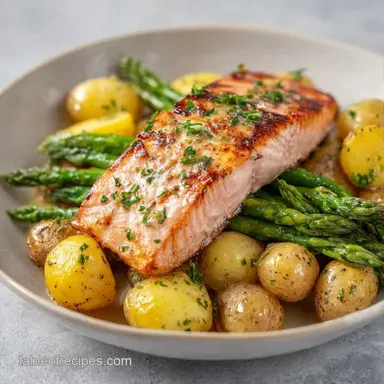
Easy Sheet Pan Salmon Dinner: Healthy & Effortless
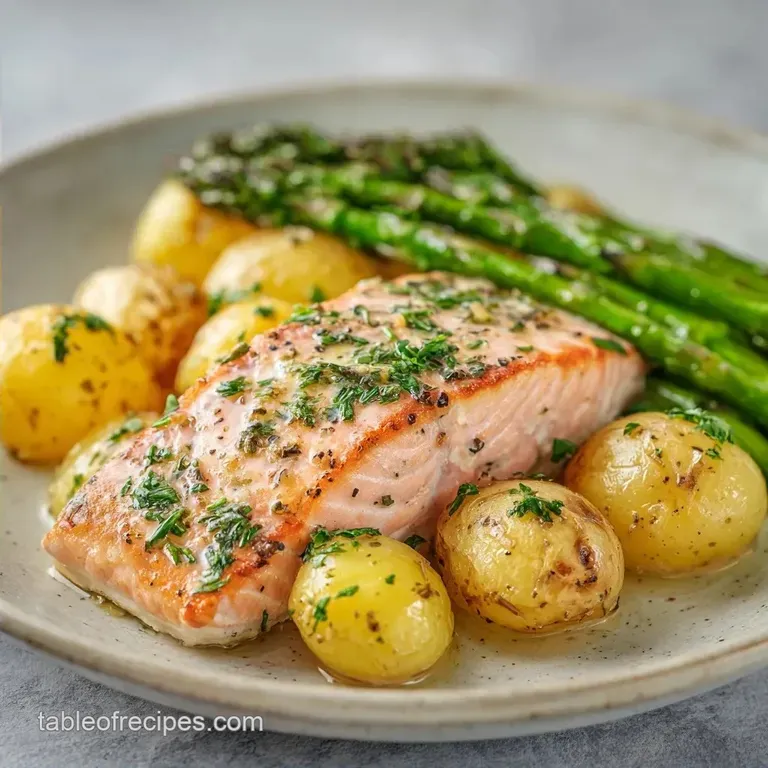
- Time:10 minutes active + 20 minutes roasting
- Flavor/Texture Hook: Zesty lemon glaze with tender crisp asparagus
- Perfect for: Weeknight dinner, low effort healthy eating, beginner friendly
- Quick and Easy Sheet Pan Salmon
- Why You'll Love This Method
- Quick Recipe Specifications
- Ingredient Analysis and Roles
- Essential Tools for Success
- Bringing the Meal Together
- Stopping Common Kitchen Disasters
- Customizing the Flavor Profile
- Storage and Reheating Tips
- Serving and Enjoying Your Meal
- Recipe FAQs
- 📝 Recipe Card
Quick and Easy Sheet Pan Salmon
That unmistakable sizzle of olive oil hitting a hot tray is the sound of a win. I remember the first time I tried making salmon for a crowd, following a traditional method that involved searing each fillet individually in a skillet. It was a nightmare, honestly.
I spent the whole night hovering over the stove, the kitchen was covered in oil splatters, and by the time I sat down to eat, the fish was cold and I was exhausted.
Then I discovered the one pan approach. In coastal regions like the Pacific Northwest or Nordic countries, salmon is often the star, but the modern professional doesn't always have time for slow roasting or complex grilling.
By shifting everything to a single surface, we keep the flavor of those traditions but ditch the tedious cleanup. It's about efficiency without sacrificing the quality of the meal.
You can expect a meal that hits every note: the brightness of lemon, the punch of garlic, and the satisfying texture of roasted veg. This Sheet Pan Salmon approach is designed for those of us who want a high protein dinner but don't want to spend an hour scrubbing pans. Let's crack on and get this in the oven.
Why You'll Love This Method
I'm all about low effort, high reward cooking. This recipe works because it respects the different cooking times of the ingredients while using a single heat source. Most people just throw everything on the tray at once, which leads to raw potatoes or overcooked fish. We avoid that by using a strategic timeline.
- The Head Start
- Potatoes need more time to soften, so roasting them first ensures they're tender when the salmon finishes.
- Oil Barrier
- Coating the fillets in a lemon garlic glaze creates a fat layer that keeps the moisture inside the fish.
- Airflow Space
- Spreading ingredients out instead of crowding the pan allows hot air to circulate, which prevents the vegetables from steaming.
- Temperature Balance
- Using 375°F (190°C) provides enough heat to roast the veg but isn't so aggressive that it dries out the salmon.
Right then, this approach means you're not juggling three different timers. It's a streamlined flow that fits into a tight window, making an Easy Sheet Pan Salmon Dinner actually possible on a Tuesday night. Trust me, once you stop searing fillets one by one, you'll never go back.
Quick Recipe Specifications
When you're time poor, you need to know exactly what you're getting into. This isn't a slow roast; it's a precision strike. We're looking at a total time of 30 minutes from the moment you pull the potatoes out of the bag to the moment you plate the food.
The efficiency here comes from the overlap of tasks. While the potatoes are doing their first 10 minute stint, you're whisking the glaze. It's all about the flow. If you're wondering how this compares to the more traditional, slow paced methods, here's the breakdown.
| Feature | Fast Sheet Pan | Classic Oven Roast |
|---|---|---|
| Active Prep | 10 minutes | 25 minutes |
| Cleanup | 1 Tray | 3-4 Pots/Pans |
| Texture | Tender Crisp | Soft/Slow Cooked |
| Effort Level | Low | Medium High |
But what about the nutrient density? By roasting everything together, the juices from the salmon mingle with the asparagus and potatoes, creating a natural sauce that keeps the meal from feeling bland. It's a smart way to get your greens and proteins in one go.
Ingredient Analysis and Roles
I don't believe in using ingredients just for the sake of it. Every item on this list has a job to do. If you use low quality oil or skip the zest, you'll notice the difference in the final bite.
| Ingredient | Science Role | Pro Secret |
|---|---|---|
| Salmon Fillets | Main Protein | Pat dry with paper towels first to help the glaze stick |
| Baby Potatoes | Starch/Base | Cut them into small, even halves for uniform roasting |
| Lemon Juice/Zest | Acid/Brightener | Zest provides the aroma; juice provides the tang |
| Olive Oil | Heat Conductor | Use a high smoke point oil to avoid a burnt taste |
The lemon zest is the real hero here. Most people just use the juice, but the zest contains the essential oils that give you that fresh, citrusy punch without adding too much liquid, which could make the fish soggy. It's a small detail that makes the dish feel much more polished.
Essential Tools for Success
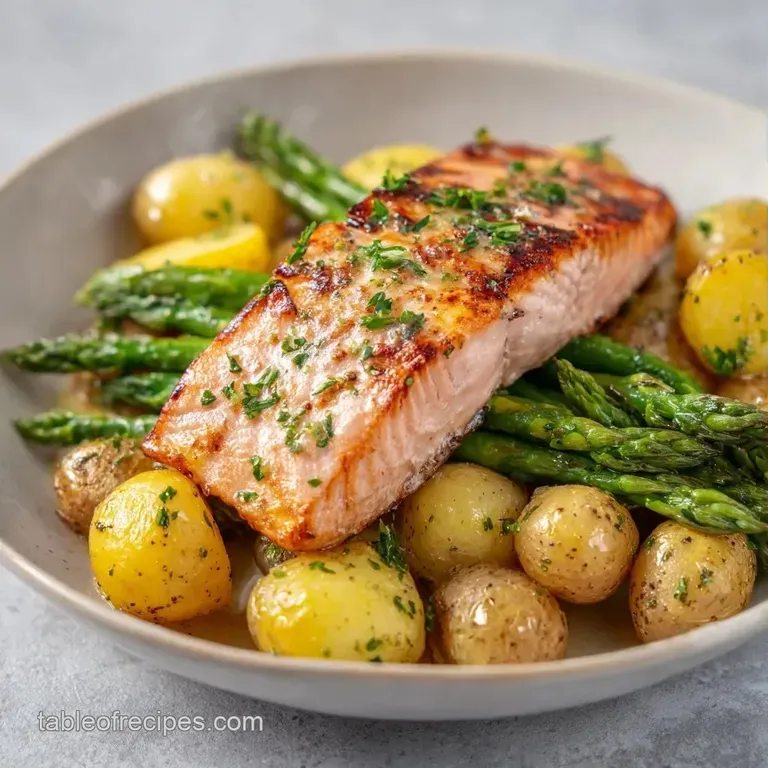
You don't need a professional kitchen for this, but a few specific tools make the process way smoother. I've found that the right equipment is the difference between a disaster and a win.
First, you need a rimmed baking sheet. If you use a flat tray, the olive oil and lemon juice will run off the sides and potentially start a grease fire in your oven. A rimmed tray keeps everything contained. I also highly recommend parchment paper or aluminum foil.
It makes the cleanup almost non existent, which is the whole point of this recipe.
For the glaze, a small mixing bowl and a whisk (or even a fork) will do. If you have a silicone brush, it's great for ensuring every inch of the salmon is covered, but drizzling with a spoon works just as well. Honestly, don't bother with expensive gadgets here; the basics are all you need.
Bringing the Meal Together
Let's get into the actual flow. I've broken this down into phases so you can manage your time efficiently. Keep an eye on your checkpoints to make sure nothing overcooks.
Phase 1: The over High heat Prep
Preheat your oven to 375°F (190°C). Line your rimmed baking sheet with parchment paper or foil. Toss the halved baby potatoes with 1 tbsp of olive oil and a pinch of salt. Spread them across the tray. Roast for 10 minutes until they are just starting to soften.
This is your first precision checkpoint.
Phase 2: The Assembly
Move the roasted potatoes to the sides of the pan to make room in the middle. Place the 4 salmon fillets in the center. Arrange the trimmed asparagus around the edges of the potatoes.
While the pan is out of the oven, whisk together the remaining 2 tbsp olive oil, minced garlic, lemon juice, lemon zest, dried oregano, salt, and black pepper in a bowl.
Phase 3: The Final Roast
Drizzle the lemon garlic glaze evenly over the salmon fillets and the vegetables. Return the pan to the oven. Roast for 10-12 minutes until the salmon reaches a light pink hue and flakes easily with a fork. The asparagus should be tender crisp, not mushy.
Chef's Note: To get a more intense flavor, try adding a pinch of smoked paprika to the glaze. It adds a depth that mimics a grill without the extra work.
Stopping Common Kitchen Disasters
Salmon is a temperamental fish. One minute it's velvety and moist, the next it's chalky and dry. The key is knowing when to pull it out. If you're using very thick fillets, you might need an extra 2 minutes, but don't go overboard.
Why Your Salmon is Dry
This usually happens because of oven hot spots or simply leaving the fish in too long. Salmon continues to cook for a few minutes after it leaves the oven, so take it out when it's just barely underdone in the center.
Why Your Veggies are Soggy
Crowding the pan is the biggest culprit here. If the asparagus and potatoes are piled on top of each other, they steam instead of roast. Give them space to breathe.
| Problem | Root Cause | Solution |
|---|---|---|
| Chalky Fish | Overcooked | Use a fork to check for flaking at 10 mins |
| Raw Potatoes | Cut too large | Quarter the potatoes if they're bigger than 1 inch |
| Bland Taste | Lack of salt | Season the potatoes separately before the first roast |
Common Mistakes Checklist
- ✓ Did you pat the salmon dry before glazing?
- ✓ Are the potatoes halved or quartered for even cooking?
- ✓ Is there enough space between the vegetables on the tray?
- ✓ Did you use the zest as well as the juice?
- ✓ Did you preheat the oven fully before starting?
If you're worried about the fish, checking out a Salmon for 4 Servings recipe guide can help you visualize the ideal doneness.
Customizing the Flavor Profile
Once you've nailed the basic Easy Sheet Pan Salmon Recipes, you can start playing with the flavors. The lemon garlic base is a classic, but it's also a blank canvas. If you want to shift the vibe, you only need to change the glaze.
For a Mediterranean twist, swap the oregano for dried thyme and add a few halved cherry tomatoes to the pan during the final roast. They'll burst and create a jammy sauce. If you want something more bold, replace the lemon juice with a mix of soy sauce and honey for a glaze that caramelizes beautifully.
If you're looking for more ways to mix up your one pan meals, my Pan Salmon with Potatoes recipe variation offers a slightly different veg combo that's just as efficient.
Decision Shortcut
- If you want crispier potatoes: Cut them into quarters and add 2 mins to the first roast.
- If you want a tangier finish: Add an extra teaspoon of lemon zest to the glaze.
- If you're using frozen salmon: Thaw completely and pat dry to avoid excess water on the pan.
Storage and Reheating Tips
Leftovers are actually great for meal prep, though salmon is best enjoyed fresh. If you have any left, store the fish and vegetables in an airtight container in the fridge for up to 3 days.
When reheating, avoid the microwave if you can. Microwaving salmon often makes it rubbery and gives it a strong "fishy" smell that can linger. Instead, pop the leftovers back in the oven at 300°F (150°C) for about 5-8 minutes. This gently warms the fish without overcooking it further.
As for zero waste, don't toss your lemon rinds. You can freeze them to use in zest later, or put them in a jar with white vinegar for a couple of weeks to make a natural, grease cutting kitchen cleaner.
Even the potato peels from larger potatoes can be tossed in oil and salt and roasted at 400°F (200°C) for 5 minutes to make a quick snack.
Serving and Enjoying Your Meal
The beauty of Sheet Pan Salmon is that it's a complete meal on its own. However, if you're serving this for a special occasion, a few additions can make it feel less like a "weeknight save" and more like a feast.
I love serving this with a dollop of Greek yogurt mixed with fresh dill and a squeeze of lemon. The coolness of the yogurt balances the roasted heat of the garlic and potatoes. If you're feeling extra hungry, a side of quinoa or wild rice is a great way to soak up the leftover lemon garlic glaze from the pan.
For those who like a bit of crunch, a sprinkle of toasted almond slivers over the salmon just before serving adds a lovely texture. It's a simple move that takes 30 seconds but changes the whole experience.
Right then, you've got a high protein, low effort dinner that tastes like it took way more work than it actually did. Enjoy!
Recipe FAQs
What temperature is best for sheet pan salmon?
375°F (190°C) is the ideal temperature. This heat level ensures the salmon stays moist while allowing the baby potatoes to roast properly on the same tray.
How do you cook salmon in the oven?
Preheat your oven to 375°F. Roast halved baby potatoes for 10 minutes, then add the salmon and asparagus and roast for another 10-12 minutes until the fish flakes easily.
Is salmon better at 350 or 400?
375°F is the best balance. 350°F takes too long and can dry out the fish, while 400°F may overcook the salmon before the potatoes are tender.
How to bake salmon for gastritis?
Limit the lemon juice and garlic. Use small amounts of olive oil and salt to keep the seasoning mild and avoid irritating the stomach lining.
Is grilled salmon good for high blood pressure?
Yes, it is highly beneficial. The omega-3 fatty acids found in salmon support overall heart health and can help manage blood pressure levels.
How to cook salmon cheaply and easily?
Use a single sheet pan. Baking the fillets with affordable baby potatoes and asparagus reduces both the ingredient cost and the time spent cleaning up.
What are some good salmon recipes without lemon?
Try a minimalist seasoning. A simple salt and pepper salmon is a fantastic alternative when you want to avoid acidity.
Sheet Pan Salmon 2