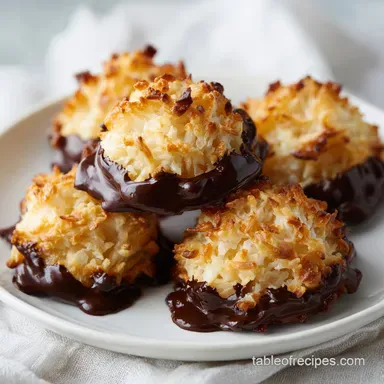
Chewy Coconut Macaroons: Low-Sugar and Extra Soft
- Time: 10 min active + 25 min baking = 35 min total
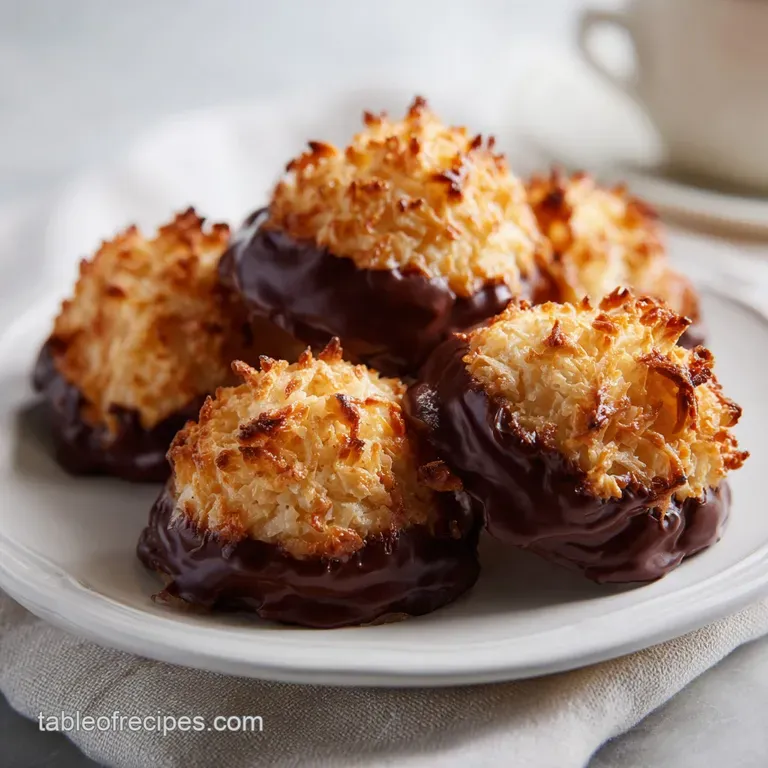
- Flavor/Texture Hook: Mahogany brown crisp edges with a velvety, chewy center
- Perfect for: Quick holiday platters or an energy dense dessert
- The Best Chewy Coconut Macaroons Recipe
- Why This Texture Happens
- Component Analysis
- Ingredients & Substitutes
- Step By Step Guide
- Fixing Common Errors
- Troubleshooting Common Issues
- Dietary Ingredient Swaps
- Scaling This Recipe
- Coconut Baking Myths
- Preservation And Waste
- Suggested Treat Pairings
- Recipe FAQs
- 📝 Recipe Card
The Best Chewy Coconut Macaroons Recipe
Have you ever noticed how some coconut treats feel like eating a dry sponge, while others have that specific, heavy pull that almost feels like candy? It comes down to the hydration of the coconut shreds and how the sugars behave under heat.
Most people just mix and hope for the best, but there is a very specific window where the sugar caramelizes without evaporating the internal moisture.
I remember making a batch for a party where I left them in for just three minutes too long. They looked great, but they had the texture of a crouton. Since then, I've treated the oven timer like a countdown to a bomb. If you hit that mahogany brown edge while the center is still pale, you win.
This chewy coconut macaroons recipe is designed to remove that guesswork. We are focusing on the saturation of the coconut to ensure every single shred is coated in the binder. It's the difference between a cookie that crumbles and one that clings to your teeth in the best way possible.
Why This Texture Happens
- The Sugar Bind: Condensed milk acts as a concentrated sugar syrup that coats the coconut, creating a barrier that prevents the shreds from drying out.
- Moisture Retention: Because we use reduced sugar condensed milk, the viscosity is higher, which traps steam inside the macaroon during the bake.
- Edge Caramelization: The sugars on the outside reach the caramelization point faster than the center, creating a structural shell.
- Fat Stabilization: The natural oils in the coconut combine with the milk fats to create a velvety mouthfeel that persists even after cooling.
| Coconut Type | Moisture Level | Texture Result | Best Use |
|---|---|---|---|
| Fresh Shredded | High | Very Chewy | This recipe |
| Desiccated | Low | Drier/Crispier | Macarons (French) |
| Flaked | Medium | Chunky/Rustic | Toppings |
Component Analysis
| Ingredient | Science Role | Pro Secret |
|---|---|---|
| Shredded Coconut | Structural Base | Use a brand with minimal added sulfur for a cleaner taste |
| Condensed Milk | Binder and Sweetener | Reduced sugar versions prevent the centers from becoming too syrupy |
| Dark Chocolate | Flavor Contrast | 70% cocoa cuts through the heavy coconut fat |
| Sea Salt | Flavor Balancer | Enhances the nuttiness of the toasted coconut |
Ingredients & Substitutes
- 3 cups (250g) sweetened shredded coconut Why this? Provides the essential fiber and chewy structure
- 3/4 cup (180ml) reduced sugar sweetened condensed milk Why this? Binds ingredients without excessive sweetness
- 1 tsp (5ml) pure vanilla extract Why this? Adds aromatic depth to the sugar
- 1/4 tsp (1.5g) fine sea salt Why this? Sharpens the contrast between sweet and bitter
- 4 oz (115g) dark chocolate (70% cocoa or higher) Why this? High cocoa solids prevent the dip from being cloying
- 1 tsp (5ml) coconut oil Why this? Gives the chocolate a glossy finish and smoother snap
Substitution Options:
| Original Ingredient | Substitute | Why It Works |
|---|---|---|
| Condensed Milk | Coconut Condensed Milk | Similar viscosity. Note: Increases coconut intensity |
| Dark Chocolate | Semi Sweet Chocolate | Similar melting point. Note: Increases overall sweetness |
| Shredded Coconut | Almond Flour (1:1) | Provides structure. Note: Results in a denser, nuttier macaroon |
If you are looking for other treats that rely on a high fat to sugar ratio for texture, you might enjoy my peanut butter cookie recipe, which uses a similar binding logic to achieve that signature chew.
Step by step Guide
Prepping the Workspace
Preheat your oven to 325°F (160°C). Line a large baking sheet with parchment paper to prevent sticking. Trust me, don't use grease or butter on the pan, as the sugars in the milk will bond to it.
Mixing the Base
In a large bowl, combine the shredded coconut, reduced sugar condensed milk, vanilla, and salt. Use a spatula to fold the mixture until the coconut is fully saturated and the dough holds together. You want it to feel tacky and heavy, not runny.
Shaping the Macaroons
Using a cookie scoop, portion the dough into mounds on the prepared baking sheet about 2 inches apart. Lightly press the tops with your palm to create a slight dome. This ensures they bake evenly without the tops burning before the bottoms are set.
Baking to Golden Perfection
Bake for 20-25 minutes until the edges turn a deep mahogany brown while the centers remain pale. If you wait for the center to brown, you've gone too far and they will be hard.
Finishing with Dark Chocolate
Allow the macaroons to cool completely on the pan. This is critical because the internal steam is still setting the structure. Melt the dark chocolate and coconut oil together in a microwave safe bowl in 30 second bursts.
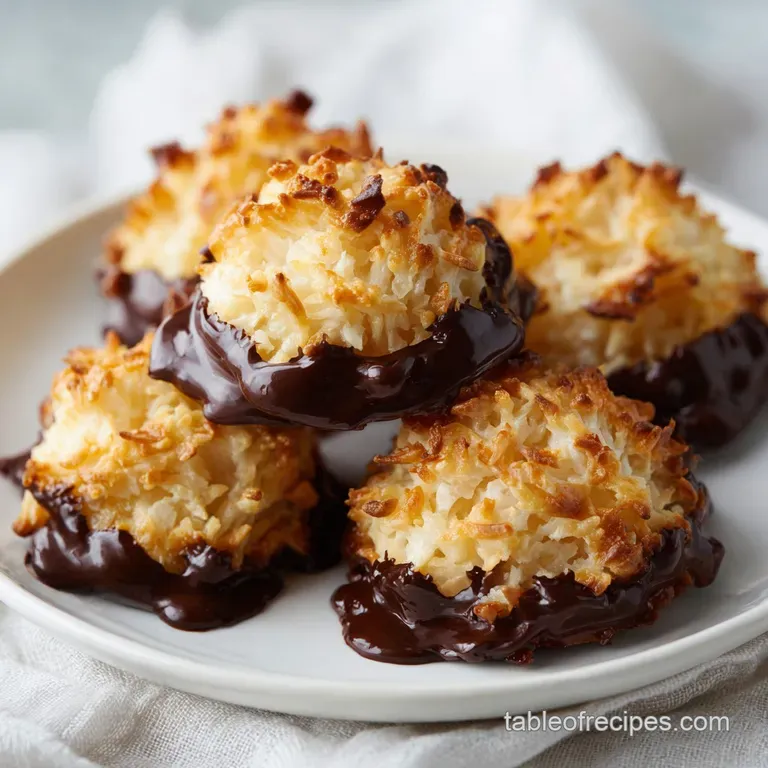
Dip the bottom of each macaroon into the melted chocolate and place them on parchment paper to set.
Fixing Common Errors
Troubleshooting Common Issues
| Issue | Solution |
|---|---|
| Why Your Macaroons Spread | If your mounds flatten into pancakes, it's usually a sign that the condensed milk was too warm or the coconut was too fine. The structure relies on the coconut shreds acting like "rebar" in concrete. |
| Why Your Macaroons Hardened | Over baking is the primary culprit. Even one or two minutes too long can evaporate the residual moisture that creates the "chew." Always pull them when the center still looks slightly underdone. |
| Why Your Chocolate Bloomed | White streaks in your chocolate usually happen if the chocolate was overheated or if moisture got into the bowl. According to Serious Eats, controlling the temperature d |
Dietary Ingredient Swaps
For those needing a vegan version of this chewy coconut macaroons recipe, you can swap the condensed milk for a vegan coconut condensed milk. The chemistry remains almost identical because the coconut fats mirror the dairy fats.
If you want to reduce the sugar further, you can use unsweetened shredded coconut, but you'll need to add a tablespoon of maple syrup to the mix. Otherwise, the macaroons will lack the "glue" needed to hold them together, and they might crumble upon impact.
To make a grain free version, this recipe is already naturally grain free. However, if you want a "chewy chocolate coconut macaroons" variation, fold in 1/4 cup of mini dark chocolate chips into the batter before baking. Just be careful, as the chips can cause the dough to slide more on the pan.
Scaling This Recipe
When you need to make a larger batch for a party, avoid doubling the salt and vanilla exactly. Instead, increase them to about 1.5x the original amount. Spices and aromatics can become overpowering when scaled linearly.
If you're scaling up, work in batches. Overcrowding the oven can drop the temperature, meaning the macaroons will steam rather than roast, which ruins the mahogany edge.
For a half batch, beat one egg if you're using an egg based version, but since this is a condensed milk recipe, you can simply halve all measurements. Use a smaller baking sheet to maintain the same heat distribution.
| Goal | Adjustment | Expected Result |
|---|---|---|
| Double Batch | 1.5x Salt/Vanilla | Balanced flavor, no "chemical" taste |
| Half Batch | 50% all ingredients | Same texture, fewer cookies |
| Vegan Shift | Coconut Condensed Milk | Tropical flavor, dairy-free |
If you love these types of rich, concentrated desserts, you might also want to try my chocolate chip muffins, which offer a similar deep cocoa profile but with a fluffier crumb.
Coconut Baking Myths
One common myth is that you must use a stand mixer to get the right consistency. In reality, a spatula and a bowl are better because over mixing can break down the coconut shreds, releasing too much oil and making the macaroons greasy.
Another misconception is that the chocolate dip is just for looks. While it's a great aesthetic, the bitterness of the 70% dark chocolate is functionally necessary to balance the high sugar content of the condensed milk. Without it, the sweetness can be overwhelming.
Preservation And Waste
Store these in an airtight container at room temperature for up to 3 days. For longer storage, the fridge is your best friend. They stay chewy in the refrigerator for about 7 days.
If you want to freeze them, place them on a tray first so they don't touch, freeze for an hour, and then move them to a freezer bag. They'll last 2 months. To reheat, just let them thaw at room temperature - don't microwave them or the chocolate will lose its snap.
Regarding zero waste, if you have leftover coconut shreds, don't toss them. Toast them in a dry pan and sprinkle them over oatmeal or yogurt. If you have a bit of leftover chocolate ganache, use it as a dip for fresh apple slices.
Suggested Treat Pairings
Because of the richness of this chewy coconut macaroons recipe, you need something to cut through the fat. A sharp espresso or a tart raspberry tea works brilliantly.
If you're putting together a dessert board, pair these with something acidic, like fresh berries or a slice of granny smith apple. The acidity resets the palate between bites of the dense coconut.
For another baked good to add to the platter, a light lemon shortbread provides a great textural contrast to the chewiness of the macaroons.
Recipe FAQs
What makes macaroons chewy?
The combination of sweetened condensed milk and precise baking time. The milk provides moisture and sugar that prevents the coconut from drying out, while pulling them from the oven at 20 25 minutes preserves the center's softness.
Why are my coconut macaroons falling apart?
The coconut wasn't fully saturated with the condensed milk. Ensure you fold the mixture with a spatula until the dough holds together firmly before scooping.
What is the secret to great coconut macaroons?
Avoid overbaking. Pull the tray from the oven when the edges are deep mahogany brown but the centers still look pale and slightly underdone to prevent them from hardening.
Are coconut macaroons supposed to be crunchy?
No, they should be chewy. Only the outer edges should have a slight crispness from the caramelization, while the interior remains soft and moist.
How to store coconut macaroons to keep them fresh?
Place them in an airtight container at room temperature. They will stay chewy for several days; if you enjoyed managing moisture levels here, see how the same principle works in our creamy meal prep.
Is it true that I must use egg whites to make macaroons fluffy?
No, this is a common misconception. This specific recipe relies on reduced sugar condensed milk for binding and texture, eliminating the need for eggs.
How to stop the macaroons from sticking to the pan?
Line your baking sheet with parchment paper. This creates a non-stick barrier that allows the sugars to caramelize at 325°F without bonding to the metal.
Chewy Coconut Macaroons