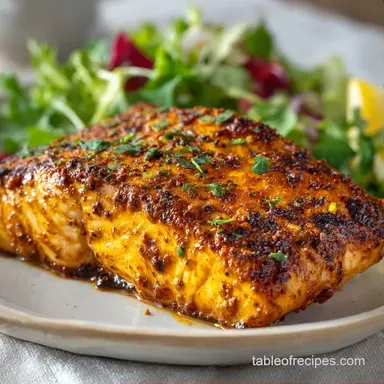
Easy Masala Salmon Recipe: Velvety and Charred
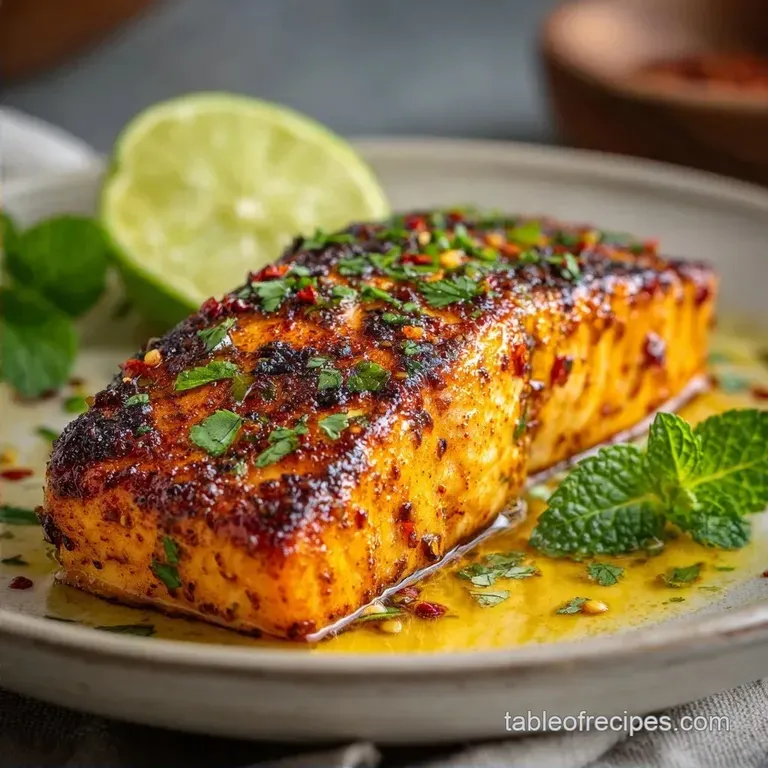
- Time: 10 min active + 20 min marinating + 8 min cooking
- Flavor/Texture Hook: Mahogany colored crust with a velvety, flaky interior
- Perfect for: Vibrant weeknight dinners or healthy meal prep
- Easy Masala Salmon Recipe for Fast Weeknights
- Why the Paste Actually Works
- The Component Breakdown
- Everything You Need and Swaps
- The Step by Step Process
- Fixing Common Cooking Mistakes
- Flavor Variations to Try
- Debunking Salmon Cooking Myths
- Keeping Leftovers Fresh
- Plating Like a Pro
- Recipe FAQs
- 📝 Recipe Card
Easy Masala Salmon Recipe for Fast Weeknights
The sound of salmon hitting a hot cast iron pan is a specific kind of magic. It's that loud, aggressive sizzle that tells you you're about to get a proper crust. I remember the first time I tried making a spiced fish dish; I just dumped the powder on the fillet and tossed it in the pan. The result?
The spices burnt in seconds, tasting like bitter ash, while the inside of the fish stayed raw and cold. It was a disaster that left me scrubbing a blackened pan for twenty minutes.
That failure taught me that the secret isn't the spice itself, but how you deliver it to the fish. You can't just sprinkle powder on a wet fillet and hope for the best. You need a paste. A real, thick, oil based rub that shields the spices from the direct heat and allows the flavors to penetrate the meat.
When you follow this Easy Masala Salmon Recipe, you aren't just cooking fish; you're managing a contrast. We're looking for that sharp, zesty hit of lemon and the warmth of garam masala against the rich, buttery fat of the salmon.
It's a bright, global flavor profile that makes a standard piece of protein feel like something from a high end bistro, but it takes less than an hour from start to finish.
Why the Paste Actually Works
The success of this dish comes down to a few simple mechanical reactions in the pan. If you've ever struggled with bland fish, it's usually because the seasoning stayed on the surface.
- Fat Based Flavor Delivery: Oil doesn't just stop sticking; it carries the fat soluble flavors of the turmeric and paprika deeper into the flesh.
- Acid Tenderization: The lemon juice begins breaking down the tough protein fibers on the surface, which creates a more velvety texture once cooked.
- Protective Barrier: The ginger garlic paste creates a physical layer between the delicate fish and the scorching pan, preventing the spices from incinerating.
- Moisture Control: By patting the fish bone dry, we remove the steam barrier, allowing the surface to hit the target temperature for a mahogany crust immediately.
If you love this style of preparation, you might also enjoy a healthy salmon sauce recipe for days when you want something more liquid and less crusty.
| Method | Time | Texture | Best For |
|---|---|---|---|
| Stovetop | 8 minutes | Charred & Crispy | Bold flavor, fast turnaround |
| Oven | 12-15 minutes | Even & Tender | Large batches, less mess |
| Air Fryer | 10 minutes | Concentrated Crust | Single servings, ultra lean |
The Component Breakdown
Understanding what each ingredient does helps you tweak the recipe without ruining the balance.
| Ingredient | Science Role | Pro Secret |
|---|---|---|
| Ginger Garlic Paste | Aromatic base & tenderizer | Use a 50/50 ratio for the best pungent balance |
| Garam Masala | Complex warmth & depth | Toast the powder in a dry pan for 30 seconds first |
| Turmeric | Earthy tone & vivid color | Always pair with black pepper to increase absorption |
| Lemon Juice | Brightness & pH balance | Freshly squeezed only; bottled juice is too metallic |
Everything You Need and Swaps
For this Easy Masala Salmon Recipe, the quality of your fish matters. I prefer center cut fillets because they have a uniform thickness, meaning the edges don't overcook before the center is done.
Main Ingredients: 12 oz (340g) salmon fillets Why this? High fat content prevents drying out 2 tbsp olive oil Why this? High smoke point and neutral taste 1 tbsp lemon juice Why this? Cuts through the rich fish
Oils 1 tbsp ginger garlic paste Why this? Provides a pungent, savory foundation 2 tsp garam masala Why this? The core warmth of Indian cuisine 1/2 tsp turmeric powder Why this? Adds a signature golden hue 1 tsp
Paprika Why this? Gives a smoky, reddish tint 1/2 tsp salt Why this? Essential for flavor extraction 1/4 tsp black pepper Why this? Adds a subtle, sharp bite
For Garnish & Serving: 1 tbsp fresh cilantro, chopped 2 lemon wedges 2 tbsp red onion, thinly sliced
Substitution Guide:
| Original Ingredient | Substitute | Why It Works |
|---|---|---|
| Salmon | Trout or Arctic Char | Similar fat profile. Note: Trout is milder |
| Olive Oil | Avocado Oil | Higher smoke point. Note: Better for very high heat |
| Ginger Garlic Paste | Fresh grated ginger/garlic | Same flavor. Note: Texture is chunkier |
| Garam Masala | Cumin + Coriander + Cinnamon | Mimics the blend. Note: Less complex flavor |
I've found that using a high-quality olive oil makes a noticeable difference in how the crust forms. If you're using a pan that isn't non stick, don't be afraid to add an extra teaspoon of oil to the pan just before the fish goes in.
The step by step Process
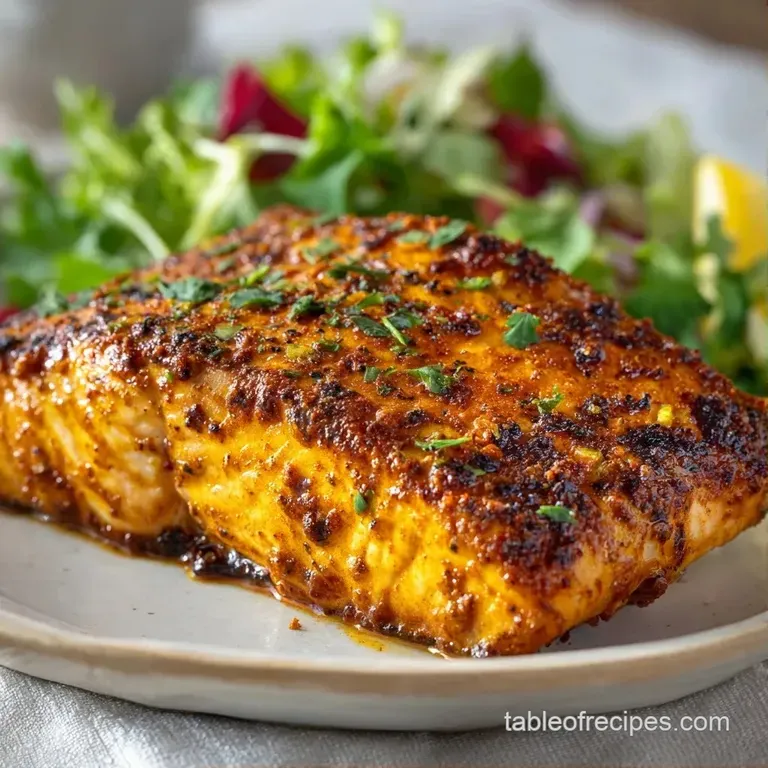
The goal here is a stark contrast: a deep, spiced exterior and a moist, translucent to opaque interior.
Preparing the Fish
- Pat the salmon fillets bone dry using paper towels. This is the most important step. If the fish is wet, it will steam instead of sear, and you'll lose that mahogany crust.
- If the fillets are very thick (over 1 inch), lightly score the top surface with a knife in a crisscross pattern. Note: This allows the masala paste to penetrate the core.
Mixing the Rub
- In a small bowl, whisk together the olive oil, lemon juice, ginger garlic paste, garam masala, turmeric powder, paprika, salt, and black pepper.
- Stir until a velvety paste forms. It should look like a thick, orange red cream.
- Coat each fillet generously with the masala paste, rubbing it into the scores and onto the skin side.
- Let the fish marinate at room temperature for 20 minutes. Note: Do not refrigerate now; room temp fish cooks more evenly.
The Searing Stage
- Heat a cast iron or non stick skillet over medium high heat. Wait until a drop of water sizzles and disappears instantly.
- Place the salmon in the pan. Sear for 3–4 minutes without moving it until a mahogany colored crust forms.
- Flip carefully with tongs and cook for another 3–4 minutes until the fish flakes easily with a fork and the center is barely opaque.
- Garnish with finely chopped fresh cilantro and serve immediately with lemon wedges and thinly sliced red onion.
According to the USDA FoodData Central, salmon is rich in omega-3 fatty acids, which can oxidize if overcooked, leading to a "fishy" taste. Keeping to these strict timings preserves those healthy fats.
Fixing Common Cooking Mistakes
Even with a simple Easy Masala Salmon Recipe, things can go sideways. Usually, it comes down to temperature management.
Burnt Spices
If your rub turns black instead of deep brown, your pan was too hot. The turmeric and paprika in the masala can burn quickly. If this happens, lower the heat and add a small knob of butter to the pan to mellow out the bitterness.
Sticking Pan
If the fish won't budge, don't force it. The salmon will naturally release from the pan once the crust has fully formed. If you yank it too early, you'll leave the best part of the flavor stuck to the metal.
Rubbery Salmon
This is the result of overcooking. When the proteins tighten too much, the fish becomes rubbery and dry. Use a meat thermometer to pull the fish at 125°F (52°C) for medium rare or 135°F (57°C) for medium.
| Problem | Root Cause | Solution |
|---|---|---|
| Bitter Taste | Spices burnt too fast | Lower heat; use more oil in paste |
| Raw Center | Pan too hot on outside | Score fillets deeper or lower heat |
| Mushy Texture | Marinated too long in acid | Limit lemon juice marination to 30 mins |
Common Mistakes Checklist:
- ✓ Did you pat the fish completely dry?
- ✓ Did you wait for the pan to reach the "water drop sizzle" stage?
- ✓ Did you avoid moving the fish during the first 3 minutes?
- ✓ Is the fish resting for 2 minutes before serving?
- ✓ Did you use fresh lemon instead of bottled?
Flavor Variations to Try
Once you've nailed the basic Easy Masala Salmon Recipe, you can start playing with the profile.
Oven Method
For an Easy Masala Salmon Recipe Oven version, preheat your oven to 200°C (400°F). Place the marinated fillets on a parchment lined tray. Bake for 12-15 minutes depending on thickness. You won't get the same sear, but the cook is more forgiving.
Creamy Twist
If you want something more indulgent, you can serve this with a creamy salmon sauce. The richness of the cream balances the sharp spices of the masala perfectly.
Pakistani Style
For a zesty Pakistani style variation, add 1/2 tsp of amchoor (dried mango powder) and a pinch of crushed red chili flakes to the paste. This adds a tangy, pungent kick that is typical of regional preparations.
Air Fryer Option
Set your air fryer to 200°C (400°F). Place the marinated fillets in the basket for 10 minutes. This is great for a single serving and creates a very concentrated, crispy exterior.
Decision Shortcut: If you want a charred crust → Use the Cast Iron Stovetop method. If you're cooking for 4+ people → Use the Oven method. If you're in a rush for lunch → Use the Air Fryer method.
Debunking Salmon Cooking Myths
There is a lot of bad advice out there about cooking fish. Let's clear a few things up.
Myth: Searing seals in the juices. Searing doesn't actually create a waterproof seal. Moisture loss happens regardless of how you start the cook. The sear is entirely about flavor and texture through the browning of the surface.
Myth: You must cook salmon until it's opaque throughout. Overcooking is the enemy of salmon. It's perfectly safe and much tastier to have a slightly translucent center. This keeps the fish silky rather than chalky.
Myth: Frozen salmon is inferior to fresh. Most "fresh" salmon at the store was frozen at sea anyway. As long as you thaw it slowly in the fridge and pat it bone dry, the results are virtually identical.
Keeping Leftovers Fresh
Salmon is best eaten immediately, but if you have leftovers, handle them with care to avoid that strong "fishy" smell.
Storage Guidelines: Store cooked salmon in an airtight glass container in the fridge for up to 2 days. Avoid plastic containers if possible, as they can absorb the strong aroma of the masala. For the freezer, wrap fillets tightly in foil and then a freezer bag for up to 2 months.
Reheating Tips: Avoid the microwave, which turns salmon into rubber. Instead, place the fillet in a pan over low heat with a teaspoon of water or butter. Cover with a lid for 2-3 minutes to steam it back to life.
Zero Waste Ideas: Don't throw away the leftover masala paste in the bowl. Mix it into a batch of basmati rice or stir it into some Greek yogurt to make a quick dipping sauce. You can also use the leftover lemon wedges to brighten up a side salad.
Plating Like a Pro
The colors in this Easy Masala Salmon Recipe are stunning deep oranges and yellows contrasted with bright greens and purples.
Start by placing a mound of fluffy jasmine rice or quinoa in the center of the plate. Lean the salmon fillet against the grain at a slight angle to create height. Scatter the thinly sliced red onion around the base of the fish; the purple provides a sharp visual contrast to the golden orange crust.
Finish with a generous sprinkle of fresh cilantro and a final squeeze of lemon right before serving. The acidity will make the colors "pop" and awaken the aromatics of the garam masala.
For a professional touch, serve it on a dark slate or a white ceramic plate to make the vibrant hues of the Indian spices the star of the show.
Recipe FAQs
What makes this masala salmon more unique than standard recipes?
The use of garam masala and ginger garlic paste. This creates a complex, aromatic flavor profile that differs from typical lemon butter preparations.
Which herbs and spices are best for this salmon?
Garam masala, turmeric, and paprika. These provide the signature warmth, while fresh cilantro adds a necessary cool finish.
Can I cook this masala salmon in the oven instead of a pan?
Yes, though pan-searing yields a superior crust. If you prefer a faster alternative with similar results, try our easy air fryer salmon.
How to prevent the spices from burning in the pan?
Mix the spices into a velvety paste with olive oil. The oil shields the powders from direct heat, preventing the bitter taste of scorched spices.
How to ensure the salmon gets a mahogany crust?
Pat the fillets bone dry using paper towels. This removes surface moisture, allowing the fish to sear instantly rather than steaming in its own juices.
Is it true that marinating the salmon overnight improves the flavor?
No, this is a common misconception. The lemon juice in the marinade will cure the fish, resulting in a mushy texture if left too long.
How to tell when the masala salmon is finished cooking?
Press the fillet with a fork to see if it flakes easily. The center should remain barely opaque to ensure the fish stays moist.
Easy Masala Salmon Recipe