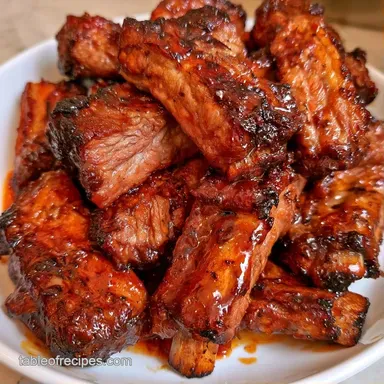
Tender Fall off the Bone Beef Ribs
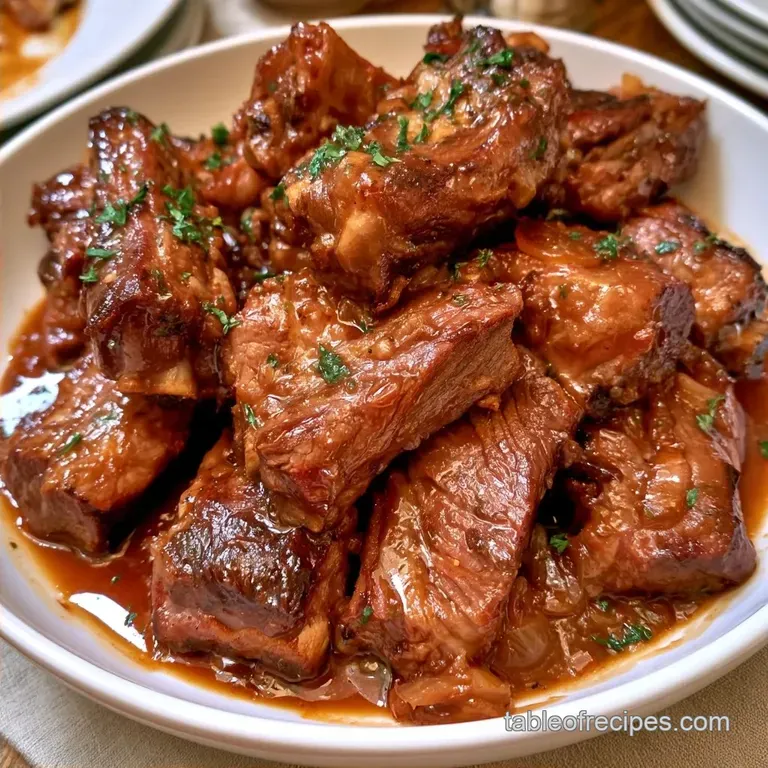
- Time: 20 min active + 5 hours cooking
- Flavor/Texture Hook: Mahogany colored crust with tender meat
- Perfect for: Weekend feast or low effort crowd pleasing
Beef Ribs
Imagine spending $40 on a premium rack of ribs, only to pull them from the oven and find them as tough as rubbery shoe leather. It's a nightmare. You've waited hours, the house smells like BBQ, and then you bite in and it's a workout for your jaw.
This usually happens because the heat was too high or the cooking time was too short, leaving the connective tissue locked tight.
I used to struggle with that exact problem until I stopped treating beef like pork. Beef needs a different approach to get that specific pull away from the-bone texture. These Beef Ribs use a two stage temperature shift to lock in moisture while creating a crust that actually holds onto the glaze.
You can expect a rich, deep flavor that doesn't rely on piles of sugar. We're focusing on the beefy core of the meat, using a lean glaze to finish. By the time you're done, the meat will be velvety and easy to eat, with a mahogany finish that looks like it came from a professional pit.
Why Most Recipes Get This Wrong
Most people cook these too fast. Beef is tougher than pork, and the ribs are packed with collagen. If you blast them with heat, that collagen shrinks and tightens, which creates that rubbery texture I mentioned. By holding a steady 275°F (135°C), we slowly melt that collagen into gelatin. This is similar to how Guinness Braised Short Ribs get their texture, though the oven method gives us a better crust.
The Steam Chamber: Wrapping the meat in double layer foil creates a localized steam environment. This prevents the edges from drying out while the internal temperature climbs.
Sugar Management: Too much sugar in the rub burns at high temps. We use a balanced ratio so the crust browns without turning bitter and black during the initial sear.
The logic here is all about the 203°F (95°C) internal mark. That's the magic number where the muscle fibers finally relax and the meat slides off the bone.
| Goal | What to change |
|---|---|
| More Smoke | Use a smoker at 225°F (110°C) |
| Extra Char | Broil for 3 mins instead of 5 |
| Tangier Glaze | Add 1 tbsp extra cider vinegar |
Gathering Your Essentials
The quality of your Beef Ribs depends on the fat cap. Look for good marbling, but don't be afraid of some fat, as it keeps the lean parts from drying out during the five hour stretch.
For the dry rub, we use smoked paprika for that "outdoor" flavor and brown sugar for the color. The cayenne adds a tiny kick, but it doesn't make the dish spicy. If you're sensitive to heat, just skip it.
For the glaze, we avoid thick, store-bought syrups. The tomato paste provides the body, while the apple cider vinegar cuts through the richness of the beef. It's a lean approach that lets the meat shine.
Dry Rub Ingredients
- 1/2 cup brown sugar Why this? Helps with caramelization and color (Substitute: Coconut sugar)
- 2 tbsp smoked paprika Why this? Adds a wood fired aroma (Substitute: Sweet paprika + drop of liquid smoke)
- 1 tbsp garlic powder Why this? Pungent base flavor (Substitute: Onion powder)
- 1 tbsp onion powder Why this? Adds savory depth (Substitute: Garlic powder)
- 1 tbsp kosher salt Why this? Draws out moisture for the rub (Substitute: Sea salt)
- 1 tsp black pepper Why this? Classic heat (Substitute: White pepper)
- 1/2 tsp cayenne pepper Why this? Subtle background warmth (Substitute: Chili powder)
The Meat and Binder - 3.5 lbs beef back ribs Why this? High flavor, manageable size (Substitute: Short ribs) - 2 tbsp olive oil Why this? Simple binder for the rub (Substitute: Avocado oil)
The Glaze
- 1/2 cup unsweetened tomato paste Why this? Thick, rich base (Substitute: Tomato puree)
- 1/4 cup apple cider vinegar Why this? Bright acidity (Substitute: Red wine vinegar)
- 2 tbsp honey Why this? Tacky finish (Substitute: Maple syrup)
- 1 tbsp Worcestershire sauce Why this? Umami boost (Substitute: Soy sauce)
- 1/2 tsp salt Why this? Seasoning balance (Substitute: Kosher salt)
Equipment Needed
A basic oven is all you need for this recipe. The most critical piece of equipment is the wire rack; if you place the meat directly on a baking sheet, the bottom will boil in its own juices and become soggy.
- Baking sheet (large enough for the ribs)
- Wire cooling rack (that fits inside the baking sheet)
- Heavy duty aluminum foil (avoid thin foil as it tears easily)
- Meat thermometer (a digital probe is ideal)
- Butter knife (to remove the membrane)
- Basting brush
How to Make It
Preparing the Meat
- Peel away the thin membrane from the back of the Beef Ribs. Use a butter knife to catch the edge, then grip it with a paper towel to pull it off in one piece. Note: This allows the rub to penetrate the meat
- Lightly coat the ribs in olive oil. Note: This helps the spices adhere
- Generously apply the dry rub to all sides. Use your palms to press the seasoning into the meat so it stays put.
The Low and Slow Process
- Set the oven to 425°F (218°C). Place the ribs on a wire rack over a pan and roast for 15 minutes until the crust sets and smells toasted.
- Lower the oven temperature to 275°F (135°C).
- Wrap the Beef Ribs tightly in a double layer of heavy duty aluminum foil, ensuring there are no gaps where steam can leak.
- Bake for 3 to 4 hours until the internal temperature reaches 203°F (95°C).
The Final Glaze
- In a small bowl, whisk together the tomato paste, apple cider vinegar, honey, Worcestershire sauce, and salt.
- Remove the foil and brush the glaze over the top of the ribs.
- Return to the oven or broiler for 5-10 minutes until the glaze is tacky and mahogany colored.
Why Most Recipes Get This Wrong
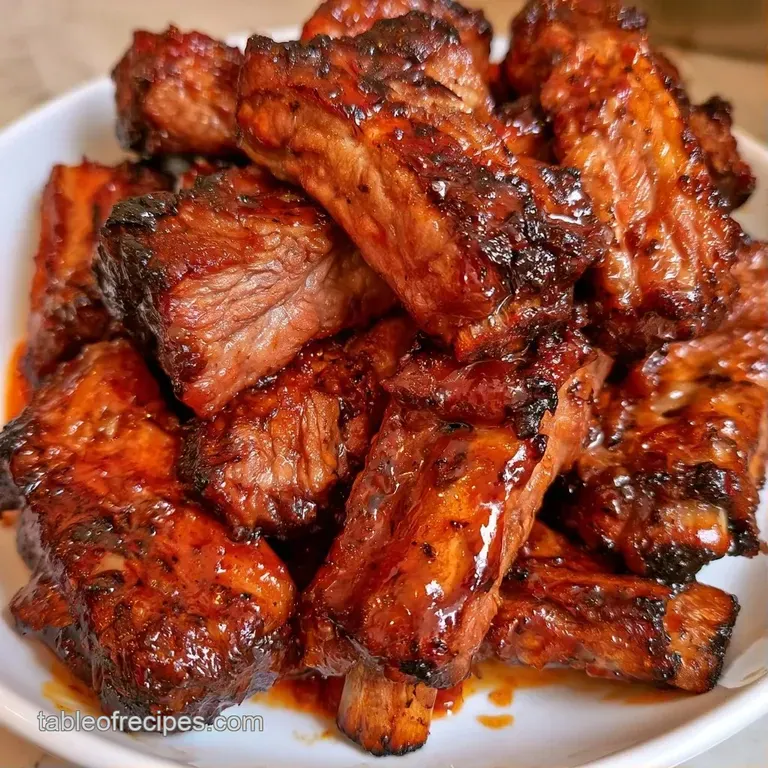
Many home cooks make the mistake of thinking "high heat equals faster results." For Beef Ribs, that's a lie. When you rush the process, you're essentially fighting the biology of the meat. The muscles are held together by tough fibers that only break down at specific temperatures over a long period.
Another issue is the "glaze timing." If you put the honey based glaze on too early, it burns long before the meat is tender. By adding it in the last 10 minutes, we get the look and the stickiness without the charred, bitter taste.
Trust the thermometer over the clock. Your oven might run hot or cold. If the ribs hit 203°F (95°C) at hour three, take them out. If they're still tough at hour four, give them another 30 minutes.
| Method | Time | Texture | Best For |
|---|---|---|---|
| Fast Roast | 2 hours | Chewy/Firm | Quick dinner |
| Low & Slow | 5 hours | Fall off-bone | Weekend feast |
What Can Go Wrong (and How to Fix It)
Fixing Tough Rubbery Meat
If the meat isn't pulling away from the bone, it simply hasn't reached the collagen breakdown point. This is the most common issue with Beef Ribs. The only fix is more time. Wrap them back up in foil and give them another 45 minutes.
Preventing Dry Shrunken Ribs
Dry ribs happen when the foil seal is loose, letting the steam escape. If you notice the meat looks shriveled, you can add a splash of apple juice or water inside the foil before re sealing.
Managing a Burnt Glaze
If the glaze turns black too quickly, your broiler is too hot. Move the rack to a lower position or switch back to the oven's regular heat.
| Problem | Fix |
|---|---|
| Meat is rubbery | Bake another 30-60 mins in foil |
| Glaze is too thin | Simmer glaze in a pan for 5 mins first |
| Rub is falling off | Press rub in harder next time |
Freezing and Reheating Guide
These Beef Ribs can be stored chilled for as long as 4 days in an airtight container. Avoid reheating them in the microwave to prevent the meat from becoming rubbery. Instead, wrap the ribs in foil with a tablespoon of water and warm at 300°F (150°C) for 20 minutes.
To freeze, ensure the meat has cooled entirely. Wrap individual portions tightly in foil before placing them in a freezer bag; they will remain fresh for 3 months. Thaw overnight in the refrigerator before you reheat them.
Save the leftover pan juices. After straining the fat, use the remaining liquid to make a beef gravy or mix it into mashed potatoes. This concentrated flavor is far too valuable to discard.
Make It Your Own
If you have a smoker, you can adapt this for a Traeger or traditional offset. Smoke the ribs at 225°F (110°C) until they hit 165°F internal, then use the foil wrap method to finish them. This gives you that deep smoky ring.
For those who prefer a slow cooker, you can skip the initial sear and go straight to the low setting for 8 hours. However, you'll still want to finish them under the broiler to get that mahogany crust, otherwise, they'll look gray. If you're into this style, my Slow Cooker Ribs guide has more specifics.
You can also change the flavor profile by swapping the honey for maple syrup and adding a teaspoon of chipotle powder to the rub. This creates a spicy, woody taste that pairs well with a cold beer.
Scaling Your Batch
When doubling the recipe for a crowd, don't double the salt and cayenne exactly. Go for 1.5x the spices. Too much salt can overpower the beef. Work in batches if your oven is small to ensure the air can circulate around the wire rack.
For a single serving, you can use a small roasting pan. Reduce the oven temperature by about 25°F (15°C) and check the internal temp 30 minutes earlier than the recipe suggests.
Serving Suggestions
Beef Ribs are heavy and rich, so you need something acidic to balance the plate. A sharp vinegar based coleslaw or pickled red onions work best. The acidity cuts through the fat and cleanses the palate between bites.
For a heartier side, try roasted root vegetables like carrots and parsnips. They mirror the sweetness of the glaze. If you're feeling fancy, serve them over a bed of creamy polenta.
Right then, that's the whole process. These Beef Ribs are a low effort, high reward meal once you get the timing down. Just remember: don't rush the heat, trust your thermometer, and keep that foil seal tight. Now, go get that rack in the oven.
High in Sodium
840 mg 840 mg of sodium per serving (37% 37% of daily value)
The American Heart Association recommends that most adults limit their sodium intake to 2,300 mg per day, with an ideal limit of 1,500 mg for most adults with high blood pressure.
Tips to Reduce Sodium
-
Reduce the Dry Rub Salt-25%
Cut the 1 tbsp kosher salt in half or replace it with a potassium based salt substitute to significantly lower the sodium load.
-
Omit Extra Salt-15%
Completely remove the final 1/2 tsp of salt added to the sauce, as the dry rub already provides substantial seasoning.
-
Swap Worcestershire Sauce-15%
Substitute standard Worcestershire sauce with a low-sodium version or use coconut aminos for a similar savory flavor.
-
No-Salt Added Paste-10%
Ensure the unsweetened tomato paste you use is specifically labeled as 'no salt added' to avoid hidden sodium.
-
Enhance with Spices
Increase the smoked paprika, black pepper, or cayenne to add more complexity and heat, making the reduction of salt less noticeable.
Recipe FAQs
What's the secret to fall off-the-bone ribs?
Low and slow heat combined with a tight foil wrap melts the connective tissue.
Tip: Ensure the foil is double layered to prevent steam from escaping.
At what internal temperature do beef ribs fall apart?
The meat becomes tender once it reaches an internal temperature of 203°F.
Tip: Use a digital probe thermometer to avoid overcooking.
Is it true that ribs must fall off the bone to be cooked correctly?
No, this is a common misconception. Ideally, the meat should be tender but still cling to the bone for the best texture.
Tip: Look for the meat to pull back about a quarter inch from the bone ends.
How do I know when the beef ribs are done?
Insert a meat thermometer into the thickest part of the rack to check for 203°F.
Tip: A probe should slide into the meat with almost no resistance.
Can I use a slow cooker for this recipe?
Yes, you can use a slow cooker, which employs the same low-heat logic found in our slow cooker beef.
Tip: Sear the ribs in a skillet first to replace the high heat oven crust.
Tender Oven Beef Ribs