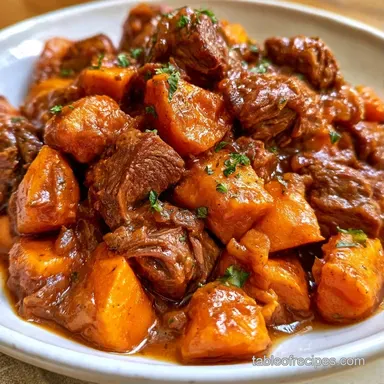
Hearty Sweet Potato Beef Stew
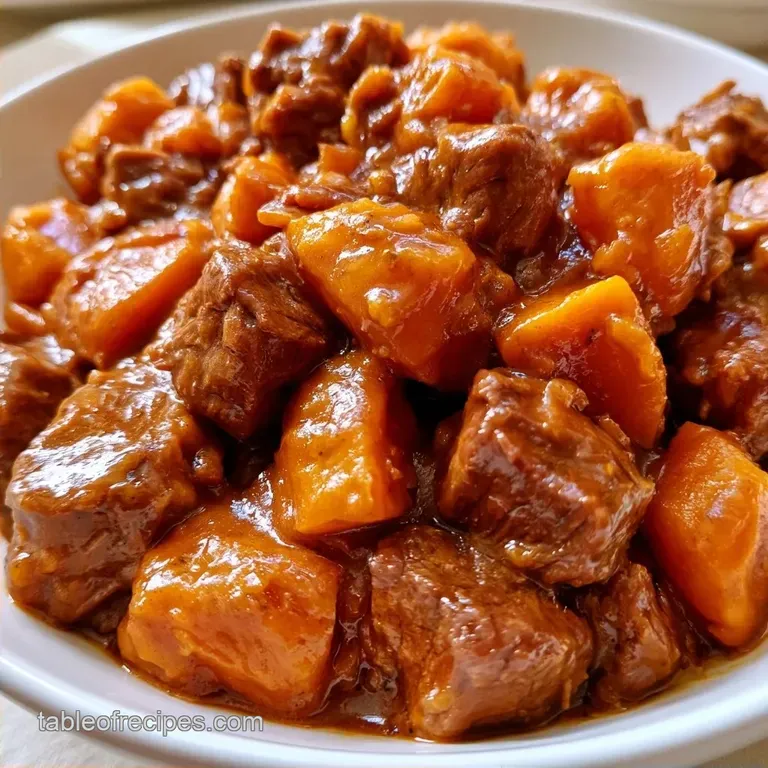
- Time: 15 min active + 6 hours simmering
- Flavor/Texture Hook: Rich, mahogany gravy with tender beef
- Perfect for: budget-friendly meal prep or a lazy Sunday
Forget everything you've been told about those pre cut "stew meat" packs at the grocery store. I used to buy them because they seemed efficient, but I always ended up with grey, rubbery cubes that felt like chewing on an eraser. It's a trap. The trick is buying a whole chuck roast and cutting it yourself.
You get way more control over the size, and the fat distribution is better. When I switched to doing this, the broth stopped feeling like salty water and started feeling like a rich, hearty sauce.
This Sweet Potato Beef Stew isn't about fancy techniques. It's about letting time do the heavy lifting. You'll get a deep, savory base and sweet potatoes that hold their shape just long enough to be satisfying.
Quick Specs for Sweet Potato Beef Stew
The beauty of this recipe is the flexibility between the stove and the slow cooker. Most of the work happens in the first 20 minutes, then you just walk away.
If you're looking for something even lighter, you might like my Chili with Sweet Potato recipe, but for pure comfort, this beef version wins.
| Goal? | Exact Change |
|---|---|
| More tang? | Stir in 1 tbsp apple cider vinegar at the end |
| Thicker gravy? | Simmer uncovered for the last 30 mins |
| Less sweetness? | Swap one sweet potato for a parsnip |
Why This Stew Actually Works
You don't need a lab coat to get this right, just a few basic rules about heat and meat.
The Chuck Roast Factor: Chuck is full of connective tissue that melts into gelatin over 6 hours. This is what gives the liquid a rich, lip smacking quality instead of just being a thin soup.
The Searing Step: Browning the beef creates a crust. According to the folks at Serious Eats, this creates new flavor compounds that simmering alone can't produce.
Starch Balance: Sweet potatoes release a different kind of starch than russets. They thicken the liquid naturally but can disappear if you overcook them, which is why we cut them into chunky 1 inch pieces.
| Fresh Ingredients | Shortcut Swaps | Impact | Savings |
|---|---|---|---|
| Dry Red Wine | Extra Beef Broth + 1 tsp Sugar | Less depth, similar body | $4 - $7 |
| Fresh Thyme | Dried Thyme (1/3 amount) | Slightly more muted flavor | $2 - $3 |
| Fresh Parsley | Dried Parsley | Less brightness, purely visual | $1 - $2 |
The Right Ingredients to Use
I've found that using the cheapest beef isn't always the best move, but chuck roast is the sweet spot for budget and quality. It's affordable but delivers the best texture for a slow simmer.
For the liquid, don't skip the tomato paste. It adds a concentrated umami hit that makes the broth taste like it's been bubbling for days. If you're trying to save money, you can use a budget friendly Cabernet or even a Merlot.
- Beef chuck roast
- 2 lbs, 1.5 inch cubes. Why this? High collagen for tenderness.
- Olive oil
- 2 tbsp. Why this? High smoke point for searing.
- Yellow onion
- 1 large, diced. Why this? Classic aromatic base.
- Garlic
- 3 cloves, minced. Why this? Sharp, pungent depth.
- All purpose flour
- 2 tbsp. Why this? Simple thickening agent.
- Sweet potatoes
- 2 large, 1 inch chunks. Why this? Earthy sweetness and body.
- Carrots
- 3 medium, thick rounds. Why this? Color and sweetness.
- Celery
- 2 stalks, sliced. Why this? Savory balance.
- Dry red wine
- 1 cup. Why this? Acidity to cut through fat.
- Low sodium beef broth
- 4 cups. Why this? Controls the salt level.
- Tomato paste
- 2 tbsp. Why this? Rich color and umami.
- Fresh thyme
- 2 sprigs. Why this? Woody, lemony notes.
- Bay leaf
- 1 leaf. Why this? Subtle background depth.
- Salt
- 1 tsp. Why this? Essential flavor enhancer.
- Black pepper
- 1/2 tsp. Why this? Mild heat.
- Fresh parsley
- 1/4 cup, chopped. Why this? Fresh finish.
Substitution options:
- Red wine → Beef broth (Adds less acidity)
- All purpose flour → Cornstarch (1 tbsp mixed with water; gluten-free option)
- Sweet potato → Butternut squash (Similar texture, slightly milder)
Tools for the Job
You can make this in a few different ways. I prefer a Dutch oven because it's a one pot deal and can move from the stove to the oven or just sit on a low burner.
If you're short on time in the morning, a slow cooker is the way to go. Just make sure you still do the searing in a pan first. Adding raw beef to a crock pot leads to a grey, bland result that nobody wants.
- 5-6 quart Dutch oven or heavy bottomed pot
- Slow cooker (optional for the simmer phase)
- Sharp chef's knife
- Tongs for searing
- Measuring cups and spoons
Making the Stew step-by-step
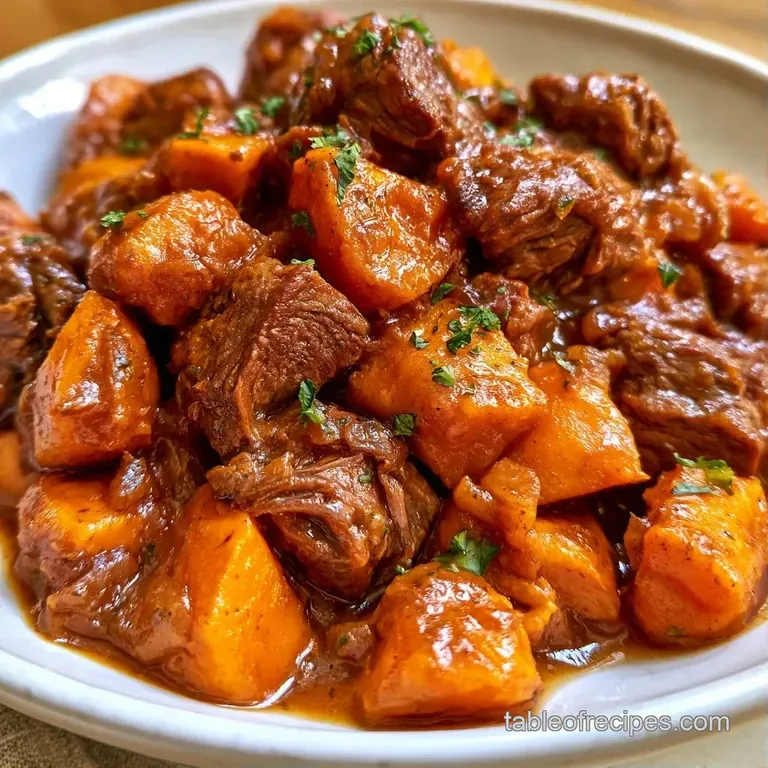
Right then, let's get into it. The first phase is all about building flavor. Don't rush the browning, or you'll lose the depth of the dish.
Phase 1: Building the Flavor Base
Pat the beef cubes dry with paper towels. Note: Wet meat steams instead of searing. Heat olive oil in a Dutch oven over medium high heat. Sear the beef in batches until a deep mahogany crust forms on all sides. Remove beef and set aside.
Add the diced onion and celery to the pot. Cook for 4-5 minutes until they turn translucent. Stir in the minced garlic and tomato paste, cooking for another 60 seconds until the paste turns a darker brick red.
Sprinkle the all purpose flour over the vegetables. Stir constantly for 1 minute until the raw flour smell disappears.
Phase 2: The Slow Simmer
Return the seared beef to the pot. Stir in the red wine, beef broth, thyme, bay leaf, salt, and black pepper.
Add the sweet potato chunks, carrots, and celery. Stir to combine everything.
Cover and simmer on low heat in the Dutch oven for 2.5 hours, or transfer the whole mix to a slow cooker and cook on low for 6 hours until the beef is fork tender.
Phase 3: The Finishing Touch
- Remove the bay leaf and thyme sprigs. Garnish with fresh chopped parsley before serving.
Chef's Note: If you have 10 extra minutes, freeze your butter for a bit and stir in a small knob of cold butter right before serving. It gives the gravy a glossy finish.
Fixes for Common Problems
While this Sweet Potato Beef Stew is straightforward, a few things can go wrong. Often, it's a matter of how the vegetables were prepared.
Stopping Mushy Potatoes
If your sweet potatoes break down into the broth, they were likely cut too small or cooked too long. You want chunks, not a puree. Keep pieces at least 1 inch thick to survive the 6 hour slow cook.
Fixing a Thin Broth
Occasionally, the liquid remains too watery. This can occur if the beef wasn't seared well enough or the flour didn't cook through. To remedy this, simmer the pot uncovered for the last 30 minutes to reduce the liquid.
Managing Too Much Salt
Between the paste and the broth, it's easy to overdo the salt. If the taste is too sharp, add a splash of water or another chopped carrot. The natural sweetness of the carrots helps balance the salt.
| Problem | Fix |
|---|---|
| Mushy Potatoes | Cut into larger 1 inch chunks |
| Thin Gravy | Simmer uncovered for 30 mins |
| Overly Salty | Add a splash of water or more carrots |
Easy Flavor Twists
Now that you've mastered the basics, feel free to customize the flavor profile. This dish serves as a perfect foundation for various interpretations.
For a deeper, pub-inspired taste, replace the red wine with a dark stout or Guinness; the beer's bitterness complements the sweet potatoes perfectly. To make it more similar to my Stew for 8 Servings recipe, stir in some frozen peas and pearl onions during the final 10 minutes of cooking.
To make this Paleo friendly, omit the flour and instead use an arrowroot powder slurry, or simply rely on the sweet potatoes to thicken the pot naturally. While it won't have a gravy like consistency, it remains satisfyingly hearty.
Fast adjustments for a new flavor:
- Spicy: Stir in 1/2 tsp red pepper flakes while sautéing.
- Smoky: Mix 1 tsp smoked paprika in with the tomato paste.
- Herbaceous: Toss in a handful of fresh rosemary alongside the thyme.
Storage and Waste Tips
This stew often tastes even better the following day, as the flavors have more time to meld and the broth thickens.
Store any remaining portions in a sealed container in the refrigerator for as long as 4 days. If you prefer to freeze it, allow the stew to cool entirely first. This Sweet Potato Beef Stew will keep well in the freezer for about 3 months.
To reheat, use a stove over medium heat, adding a small amount of water or broth if it has become overly thick.
To minimize waste, gather your onion skins, carrot ends, and celery tops in a freezer bag. When the bag is packed, boil the scraps in water to create a free vegetable stock for your next dish.
Best Ways to Serve
While this dish is a hearty one-bowl meal, a few side options elevate the experience. A piece of toasted garlic bread or a slice of crusty sourdough is essential for sopping up every bit of gravy.
I also recommend serving it alongside a small portion of mashed potatoes or some steamed kale, which provides a bitter contrast to the rich beef. For a lighter alternative, a simple arugula salad with lemon vinaigrette brightens the richness of the stew perfectly.
Common Stew Misconceptions
Browning "locks in" the juices. This is a frequent misunderstanding. Searing does not create a waterproof barrier on the meat; moisture loss occurs regardless of whether the beef is browned.
The primary reason to sear is for the taste, as the caramelized crust adds a depth of flavor that can't be replicated otherwise.
Low and slow is the only way. Slow cookers are excellent, but a pressure cooker (like an Instant Pot) can achieve the same tenderness in about 45 minutes. You might lose a small amount of the complexity that comes with a long simmer, but for a weeknight dinner, it's a fair compromise.
You must buy "stew meat". As mentioned, pre-cut stew meat is often a collection of various scraps that cook at different rates. Buying a whole roast and cutting it yourself ensures every piece of beef is the same cut and reaches a uniform level of tenderness.
Recipe FAQs
Is it true that sweet potatoes break down too quickly for beef stew?
No, this is a common misconception. Cutting them into 1 inch chunks helps them maintain their shape during the long simmer.
Tip: Use a sharp knife for clean cuts to prevent premature crumbling.
How long should sweet potatoes simmer to soften?
Simmer for 2.5 hours in a Dutch oven or 6 hours on low in a slow cooker. This ensures both the beef and vegetables are fork tender.
Tip: Test a piece of carrot before serving to verify the texture.
What is the slow cooker method?
Sear the beef and sauté the vegetables first, then transfer everything to the slow cooker on low for 6 hours. If you enjoy these cozy flavors, see how we create similar warmth in our creamy fall casserole.
Tip: Avoid adding extra liquid as the slow cooker retains more moisture than a Dutch oven.
Which mistakes often ruin beef stew?
Failing to sear the meat in batches often leads to steaming rather than browning. Adding flour without cooking it for a minute can leave a raw taste in the broth.
Tip: Pat the beef cubes dry with paper towels first for a better mahogany crust.
Sweet Potato Beef Stew