Creamy Autumn Mushroom Risotto

- Time: 10 minutes prep + 35 minutes heat
- Key Profile: Earthy, creamy, and rich
- Ideal for: Mid-week meals or a simple date night
Originating in Northern Italy's Po Valley, the region's soil was ideally suited for short grain rice. In this area, preparing risotto is more of a tradition than a simple meal, embodying the changing seasons and the intimacy of the home.
While traditionally requiring immense patience and constant stirring, I've refined the process to better suit a modern, hectic pace.
I'll never forget my first attempt at Mushroom Risotto for a visitor. Obsessing over the "right" way to do it led me to over stir the rice into a thick, gummy mess. Despite the failure, it taught me the importance of giving the grains space and ensuring the broth is hot.
Once I relied on my senses rather than a rigid set of rules, it all fell into place.
This approach to Mushroom Risotto captures a robust, woody essence without requiring hours of constant attention. By prioritizing high impact techniques specifically searing the mushrooms and finishing with a touch of acidity to balance the creaminess you'll achieve a velvety result that feels upscale yet remains rooted in natural, earthy tones.
Mushroom Risotto: The Easy Guide
The success of this recipe lies in the harmony between the starchy rice and the savory umami of the mushrooms. By carefully controlling the heat and liquid, you'll achieve a naturally thick, creamy sauce. The process fills your home with the inviting scent of a cozy bistro.
If you're craving more of these earthy tones, you might enjoy my spinach mushroom lasagna, which offers a similar taste in a baked version. For this risotto, however, the magic happens entirely in the pan.
Why This Recipe Works
- over High heat Searing: Browning mushrooms in a single layer creates a mahogany crust, which adds a concentrated savory depth that you won't get from simmering them in the rice.
- Starch Agitation: Stirring the Arborio rice doesn't just mix things, it rubs the grains together. This releases amylopectin, which thickens the broth into a creamy sauce.
- Acidic Balance: A tiny bit of lemon juice at the end brightens the heavy butter and cheese, making the Mushroom Risotto taste fresh rather than weighed down.
| Ingredient Choice | Shortcut Version | Impact on Dish | Savings |
|---|---|---|---|
| Fresh Mushrooms | Canned Mushrooms | Loss of texture and earthy depth | 5 mins |
| Fresh Parmesan | Pre shredded | Grainier melt due to cellulose | 2 mins |
| Homemade Broth | store-bought Cube | Slightly saltier, less complex | 30 mins |
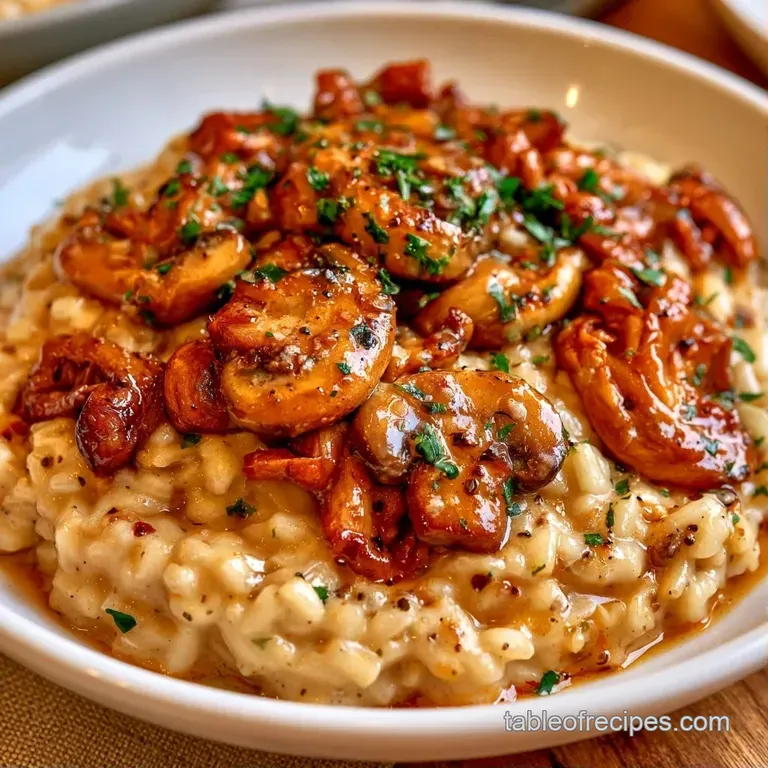
The main goal is to achieve the "all'onda" consistency, which is Italian for "like a wave." When you shake the plate, the Mushroom Risotto should ripple slightly rather than sitting in a stiff clump.
Ingredient Deep Dive
The quality of your rice determines the final texture. Arborio is the standard because it has a high starch content but keeps its shape. If you use long grain rice, you'll just end up with mushroom flavored porridge.
| Ingredient | What It Does | Best Swap |
|---|---|---|
| Arborio Rice | Provides the creamy structure | Carnaroli rice (more firm) |
| Mixed Mushrooms | Adds earthy umami flavor | Portobello or Chanterelles |
| Dry White Wine | Cuts richness with acidity | Dry Vermouth or extra broth |
| Parmesan Cheese | Adds salt and thickness | Pecorino Romano (saltier) |
Adding a mix of mushrooms, like shiitakes and creminis, gives the Mushroom Risotto more dimension. One provides a meaty bite, while the other adds a subtle, nutty aroma.
Essential Kitchen Gear
While you don't need professional equipment, a pot with a heavy base is a requirement. I opt for a Dutch oven to ensure the heat spreads evenly, as a thin pot will likely scorch the bottom of the rice before the top is done.
A wide skillet is equally important for the mushrooms. To avoid steaming them in their own moisture, give them plenty of room to sizzle rather than boil. Finally, a sturdy ladle allows you to control the broth flow so you don't drown the grains.
From Prep to Plate
Let's dive in. The secret is ensuring your broth is warm before you start the rice; adding cold liquid will drop the pot's temperature and stall the cooking process.
Phase 1: Developing the Umami
Heat the olive oil and 2 tbsp of butter in a skillet over medium high heat. Arrange the mushrooms in a single layer. Now, here is the crucial part: leave them alone. Let them sear for a few minutes until they turn a deep mahogany colored brown.
Stir in the garlic, salt, and pepper, cooking for another 2 minutes until aromatic. Remove from heat and set aside.
Phase 2: The Toast and Deglaze
In a heavy bottomed pot, melt 1 tbsp of butter over medium heat. Sauté the shallots for about 3 minutes until translucent. Add the Arborio rice, stirring constantly for 2 minutes until the edges of the grains become translucent and smell nutty.
Pour in the white wine and stir until the liquid has completely evaporated.
Phase 3: The Slow Simmer
Begin adding the warm broth one ladle at a time, stirring frequently. You don't need to stir incessantly, but keep the rice moving. Wait until the rice has absorbed nearly all the liquid before adding the next ladle.
Continue this for 18-22 minutes until the rice is al dente (tender but a slight bite).
Phase 4: The Finishing Touch
Remove the pot from the heat. Stir in the remaining 2 tbsp of butter, grated Parmesan, and the seared mushrooms. This "mantecatura" process is what gives the Mushroom Risotto its velvety texture. Gently fold in the parsley and lemon juice.
Cover the pot for 2 minutes to let the flavors meld before serving.
Chef Note: If you're serving a crowd, don't let the risotto sit in the pot for too long. It keeps absorbing liquid and will turn into a block of rice if you wait 10 minutes. Plate it immediately.
Why This Recipe Works
The success of this Mushroom Risotto comes down to thermodynamics. By adding liquid slowly, you maintain a consistent temperature that allows the rice to cook evenly from the outside in. If you dumped all the broth in at once, the outside of the grain would overcook and turn mushy before the center was soft.
The addition of butter and cheese at the very end, off the heat, is what creates the emulsion. The fat binds with the released starch and the remaining broth to create a glossy coating on every single grain. This is why we don't use cream; the rice does all the work for us.
How to Fix Common Problems
It's easy to get intimidated by this dish, but most issues are fixable in seconds. The most common problem is getting the texture wrong, usually because the broth to rice ratio was slightly off or the heat was too high.
Fixing a Thick Texture
If the Mushroom Risotto looks more like porridge than a flowing sauce, it just needs more hydration. Stir in another 1/4 cup of warm broth or water just before serving. It should move like lava on the plate.
Fixing Crunchy Rice
This usually means you didn't add enough broth or the heat was too high, evaporating the liquid before the starch could soften. Add another ladle of broth, put the lid on for 2 minutes on low heat, then stir vigorously to release the remaining starch.
Preventing Mushy Grains
Mushy rice happens when you over stir or overcook. Stop adding broth the second the rice has a slight resistance in the center. Remember that the rice continues to cook for a few minutes after you take it off the heat.
| Problem | Fix |
|---|---|
| Too thick/sticky | Stir in 1/4 cup warm broth |
| Rice is too crunchy | Add broth and steam under lid |
| Bland flavor | Add a pinch of salt or extra lemon juice |
| Mushy texture | Stop cooking 1 minute earlier next time |
Keeping It Fresh
Mushroom Risotto is ideal when served fresh, but leftovers remain tasty if stored correctly. Keep them in a tightly closed container and chill for 3 days max. Due to the starch, the dish will likely solidify while cooling, which is completely normal.
To reheat, place the risotto in a pan on medium heat and stir in a bit of water or broth. Mix gently until the consistency returns to a creamy state. Avoid using the microwave on a high setting to prevent hot and cold spots.
To minimize waste, keep the mushroom stems. Dice them and simmer with a carrot and an onion to create a quick mushroom stock for a future soup or another batch of risotto.
Mix It Up
After you have mastered the basic Mushroom Risotto, feel free to customize it. For a seasonal autumn twist, stir in a tablespoon of pumpkin puree or some diced butternut squash while cooking the shallots; this adds a touch of sweetness that balances the earthy notes of the mushrooms.
To make this vegan, substitute the butter with olive oil or a plant based butter alternative. Use nutritional yeast and a pinch of miso paste in place of the Parmesan, as the miso provides that salty, fermented depth typically found in cheese.
For a more indulgent finish, add a drizzle of truffle oil just before serving. Be cautious, however, as its potent aroma can easily overshadow the delicate flavor of the mushrooms.
- For a richer flavor
- Use chicken broth instead of vegetable.
- For a lighter finish
- Increase the lemon juice to 2 tsp.
- For a thicker consistency
- Use slightly less broth in the final ladle.
Serving Suggestions
Presentation matters for this dish. Serve the Mushroom Risotto in shallow bowls rather than deep plates. This allows the rice to spread out and show off that creamy texture. Top with a few reserved seared mushrooms and a sprinkle of fresh parsley for a pop of color.
This dish is quite rich, so it pairs well with something bright and acidic. A simple arugula salad with a lemon vinaigrette is a great choice. If you want another hearty side, these slow cooked northern beans provide a nice contrast in texture.
For a beverage match, a crisp white wine like Pinot Grigio or Sauvignon Blanc works best. The acidity in the wine cuts through the butter and cheese, refreshing your palate between bites.
If you prefer non alcoholic options, a sparkling water with a squeeze of lime is a perfect companion for an Easy Mushroom Risotto Recipe.
Whether you're making this Homemade Mushroom Risotto for a dinner party or just a quiet Tuesday night, the key is to trust your senses. Listen for the sizzle of the mushrooms, smell the nuttiness of the toasted rice, and watch for that lava like flow.
Once you get the hang of it, this Italian Mushroom Risotto will become a staple in your rotation. It's a Quick Mushroom Risotto that doesn't sacrifice an ounce of flavor, proving that a bit of technique goes a long way. Enjoy your Mushroom Risotto!
High in Sodium
1040 mg 1040 mg of sodium per serving (45% 45% of daily value)
The American Heart Association recommends a daily sodium limit of 2,300 mg for most adults to maintain heart health.
Tips to Reduce Sodium
-
Switch the Broth-30%
Replace the standard vegetable or chicken broth with low-sodium or homemade versions to significantly lower the base salt content.
-
Skip Added Salt-25%
Remove the ½ tsp of salt entirely; the broth and Parmesan cheese already provide a significant amount of savoriness.
-
Minimize Parmesan-15%
Reduce the Parmesan cheese by half or use a smaller amount of a high-quality aged cheese for a strong flavor with less volume.
-
Boost Fresh Aromatics
Increase the fresh parsley and lemon juice to add brightness and acidity, which tricks the palate into needing less salt.
Recipe FAQs
What makes this version of mushroom risotto so flavorful?
Searing the mushrooms first. Letting them sit without stirring until they turn a deep mahogany brown locks in umami rather than steaming them.
Can I prepare mushroom risotto a day in advance?
No, it is best made fresh. The Arborio rice continues to absorb liquid over time, which quickly transforms a creamy texture into a thick, gummy paste.
Which ingredients best complement the earthy taste?
Fresh parsley and a splash of lemon juice. These additions provide a necessary brightness that cuts through the richness of the butter and Parmesan cheese.
Is this a good option for autumn dinner parties?
Absolutely. The combination of woody mushrooms and creamy rice creates a cozy, comforting atmosphere perfect for the fall season.
How to achieve the ideal al dente consistency?
Add warm broth one ladle at a time. Stir frequently and wait until the liquid is nearly absorbed before adding the next portion for 18 22 minutes.
Is it true that risotto requires hours of constant stirring to become creamy?
Surprisingly, no. While frequent stirring is needed to release the rice starch, this method achieves a luxurious restaurant style result in about 35 minutes.
What other dishes pair well with this risotto?
Light proteins or crisp greens. This dish pairs beautifully with a side of baked salmon to balance the earthy richness.
Why is it necessary to toast the rice before adding wine?
To develop a nutty aroma. Sautéing the Arborio rice for 2 minutes until the edges are translucent creates a flavor foundation and helps the grains hold their shape.
Creamy Mushroom Risotto