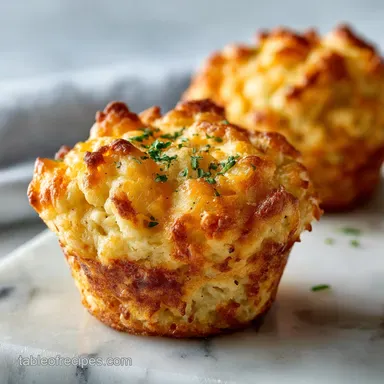
Cheesy Mashed Potato Muffins: Golden and Crispy
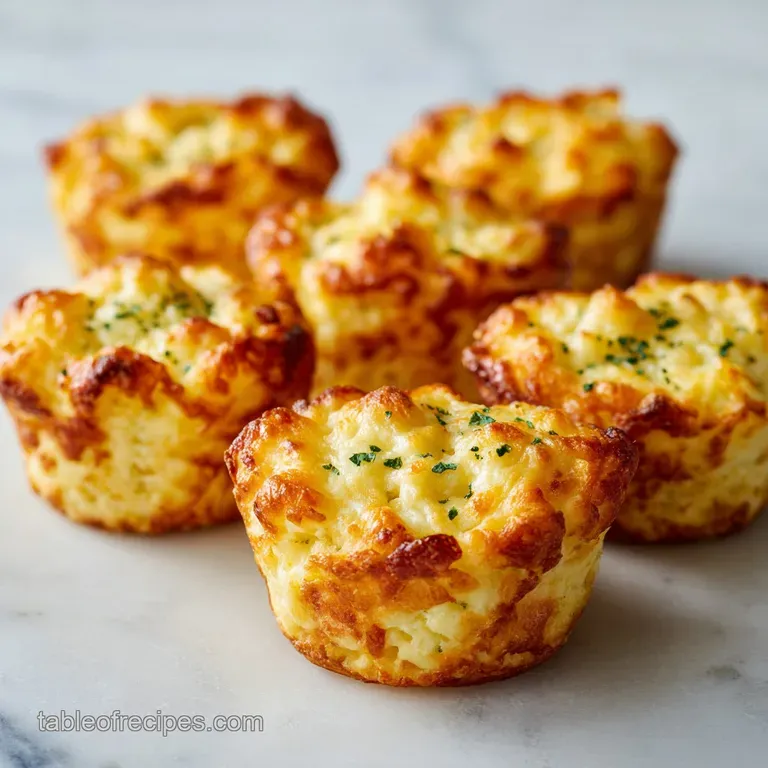
- Time: 10 min active + 20 min bake = Total 35 minutes
- Flavor/Texture Hook: Shattering golden edges with a creamy, cheesy center
- Perfect for: Using up holiday leftovers or a quick weeknight side
- Mashed Potato Muffins
- Why These Actually Hold Shape
- Component Analysis
- The Shopping List
- Tools For The Job
- Putting It All Together
- Fixing Common Muffin Mishaps
- Troubleshooting Common Issues
- Swapping For Other Diets
- Adjusting the Batch Size
- Potato Truths
- Keeping Them Fresh
- Serving Ideas
- Recipe FAQs
- 📝 Recipe Card
The smell of garlic hitting melted butter is honestly the only way I want to start my afternoon. I remember this one Tuesday where I had a giant bowl of cold, greyish mashed potatoes from Sunday dinner just staring at me from the fridge.
I didn't want to just microwave them into a gummy heap, but I definitely didn't have the energy to stand over a stove frying individual potato cakes.
I decided to just throw everything into a muffin tin and hope for the best. When I pulled them out, the edges had this incredible, lacy brown crust that practically shattered when I bit into it. That was the moment I realized that Mashed Potato Muffins are the only way to handle leftovers.
It takes the stress out of the process and gives you a portion controlled side that actually feels like a treat.
You can expect a side dish that is heavy on the comfort but light on the work. We're talking about a texture that is silky on the inside but has those toasted, cheesy corners that everyone fights over. These Mashed Potato Muffins are basically the "cheat code" for potato sides.
Mashed Potato Muffins
The first thing you need to know is that this isn't a "muffin" in the cake sense. There's no flour here. We're using the natural starch of the potato and a bit of egg to create a structure that holds together. Because we're baking them at a high heat, the edges caramelize quickly while the center stays soft.
If you've ever tried to make potato pancakes and ended up with a greasy mess on your stovetop, this is your solution. You get all that savory, toasted flavor without the oil splatters. It's efficient, it's quick, and it's a massive win for anyone who hates cleaning a greasy skillet.
Why These Actually Hold Shape
I used to wonder why some potato bakes just collapse into a puddle. It comes down to a few simple tricks.
- Egg Protein: The beaten egg acts as a binder, tightening up as it heats so the muffin doesn't slump.
- Cheese Structure: The cheddar melts and then firms up, creating a structural "skeleton" for the potato.
- Sour Cream Tang: This adds moisture without thinning out the batter too much, keeping the inside velvety.
- High Heat: Baking at 400°F (200°C) shocks the outside of the potato, locking in the shape before the middle overcooks.
| Method | Prep Time | Texture | Best For |
|---|---|---|---|
| Muffin Tin (Fast) | 10 mins | Shattering crust, creamy center | Quick sides, meal prep |
| pan-fried (Classic) | 25 mins | Greasy, crispy exterior | Traditional brunch |
| Baked Casserole | 45 mins | Soft, uniform texture | Large crowds, potlucks |
Component Analysis
I've found that using the right version of each ingredient changes the whole vibe. Here is what's actually happening in the bowl.
| Ingredient | Science Role | Pro Secret |
|---|---|---|
| Leftover Potatoes | Base Bulk | Use room temperature potatoes to avoid "clumping" when adding egg |
| Sharp Cheddar | Flavor/Structure | Grate your own; pre shredded has starch that stops it from melting smoothly |
| Sour Cream | Moisture Balance | Adds a slight acidity that cuts through the heavy butter and cheese |
| Beaten Egg | Binding Agent | Don't overbeat; just enough to combine for a lighter lift |
The Shopping List
Right then, let's look at what you need. Trust me on the sharp cheddar - mild cheese just disappears into the potato and tastes bland.
- 2 cups leftover mashed potatoes, room temperature Why this? Starch is already set, making them easier to bind
- 1 large egg, beaten Why this? Essential for keeping the muffins from falling apart
- 3/4 cup sharp cheddar cheese, shredded Why this? High flavor profile and great melting properties
- 1/4 cup sour cream Why this? Keeps the center from drying out in the high heat
- 2 tbsp unsalted butter, melted Why this? Adds a rich, nutty flavor to the crust
- 1 tsp garlic powder Why this? Even distribution of flavor compared to fresh garlic
- 1/2 tsp smoked paprika Why this? Gives a hint of "grilled" flavor without a grill
- 1/4 tsp salt Why this? Enhances the cheese and potato notes
- 1/4 tsp cracked black pepper Why this? Adds a subtle heat and depth
- 1 tbsp fresh chives, finely chopped Why this? Freshness to balance the richness
Ingredient Swaps
| Original Ingredient | Substitute | Why It Works |
|---|---|---|
| Sour Cream (1/4 cup) | Greek Yogurt (1/4 cup) | Similar acidity and thickness. Note: Slightly tangier finish |
| Sharp Cheddar (3/4 cup) | Parmesan (3/4 cup) | Salty and hard. Note: Less "gooey" but more intense flavor |
| Butter (2 tbsp) | Olive Oil (2 tbsp) | Similar fat content. Note: Lacks the buttery toasted aroma |
| Fresh Chives (1 tbsp) | Green Onion (1 tbsp) | Similar onion profile. Note: Slightly stronger taste |
Tools For The Job
You don't need much for this, which is why I love it. A standard 6 cup muffin tin is the star here. If you have a larger tin, just double the recipe.
I suggest using a large mixing bowl and a sturdy spoon or spatula. You aren't whisking anything into a froth, so a handheld mixer is overkill. Just a simple stir and fold will do. If you're worried about sticking, a bit of extra butter in the pan is your best friend.
Putting It All Together
Let's crack on. Since this is a plan based recipe, we'll follow a strict flow: Blend → Fill → Bake.
Phase 1: The Flavor Blend
First, preheat your oven to 400°F (200°C). In your large bowl, combine the room temperature mashed potatoes, beaten egg, sour cream, and melted butter. Stir this until the mixture is smooth and cohesive. If your potatoes were too cold, you might see some lumps, but just work them out with the spoon.
Next, fold in the shredded cheese, garlic powder, smoked paprika, salt, pepper, and chives. Don't overmix here - you want those little pockets of cheese to stay intact so they can create those molten bits inside.
Phase 2: The Filling Process
Generously grease a 6 cup standard muffin tin with butter or non stick spray. Don't be shy with the grease; the cheese loves to cling to the sides of the pan. Spoon the mixture into the cups.
Precision Checkpoint 1: Use the back of your spoon to press the mixture down firmly. This removes air pockets that could cause the muffin to collapse. Smooth the tops so they bake evenly.
Phase 3: The Golden Bake
Slide the tin into the oven. Bake for 18–22 minutes.
Precision Checkpoint 2: Look for the exterior to be mahogany colored and the cheese to be bubbling and slightly browned. You'll smell a toasted, savory aroma filling the kitchen right around the 20 minute mark.
Precision Checkpoint 3: Once you pull them out, let the muffins rest and chill in the pan for 5 minutes. This is the most important part - if you try to pop them out immediately, they might crack. The carryover heat sets the structure.
Chef's Note: For an even more shattering crust, sprinkle a tiny bit of extra parmesan or panko breadcrumbs on top before baking. It adds a layer of crunch that contrasts beautifully with the velvety interior.
Fixing Common Muffin Mishaps
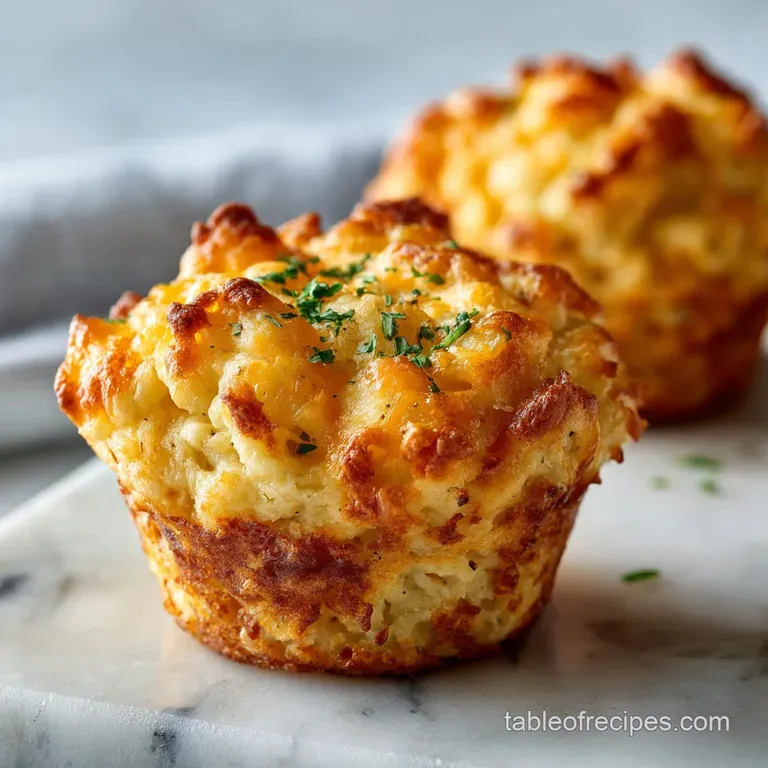
Sometimes these things happen, especially if your leftover potatoes were extra buttery or thin.
Troubleshooting Common Issues
| Issue | Solution |
|---|---|
| Why are my muffins too mushy | This usually happens if the original mashed potatoes had too much milk or cream. The extra liquid prevents the egg from setting firmly. You can fix this by adding an extra tablespoon of shredded chees |
| Why did they stick to the pan | Potato and cheese are like glue when they hit hot metal. If you didn't grease the pan enough, they'll cling. Try using parchment liners next time, or just run a thin knife around the edge after the 5- |
| Why is the top pale | If your oven runs cool, the tops might not brown. You can pop them under the broiler for 60-90 seconds at the very end. Just watch them like a hawk, because cheese goes from "golden" to "burnt" in abo |
Common Mistakes Checklist
- ✓ Did you use room temperature potatoes? (Cold potatoes don't blend well with eggs)
- ✓ Did you press the mixture down firmly? (Prevents hollow centers)
- ✓ Did you let them rest for 5 minutes? (Crucial for structural integrity)
- ✓ Is your oven truly at 400°F? (Low temp leads to mushy edges)
Swapping For Other Diets
If you're looking for a different twist, you can easily adapt this. For a dairy-free version, use a vegan butter substitute and a cashew based sharp cheddar. The texture will be slightly softer, but the flavor remains punchy.
If you want a healthier version, swap the sour cream for non fat Greek yogurt and use a reduced fat cheddar. You'll lose a bit of that velvety richness, but it's still a great way to use up potatoes. If you love starchy sides, you might also enjoy my sweet potato casserole for a different kind of baked comfort.
Decision Shortcut
- Want more crunch? → Top with panko and bake.
- Want more heat? → Add a pinch of cayenne or chopped jalapeños.
- Want a lighter version? → Use Greek yogurt instead of sour cream.
Adjusting the Batch Size
Scaling this recipe is pretty straightforward, but you have to be careful with the binders.
Scaling Down (1/2 Batch) Use a smaller tin or just fill 3 cups. For the egg, beat one egg in a small bowl and use exactly half. Reduce the baking time by about 20% (check them at 15 minutes) since there's less mass in the oven.
Scaling Up (2x-4x Batch) When doubling, don't just double the salt and paprika; go to about 1.5x first, then taste. Liquids like sour cream can be reduced by 10% to ensure the muffins don't become too soft.
I recommend working in batches unless you have a massive oven, as overcrowding can lead to uneven browning.
Baking Tip for Large Batches If you're baking 24 muffins at once, lower the temperature to 375°F (190°C) and extend the time by 5 minutes. This ensures the ones in the middle of the tray cook through before the edges burn.
Potato Truths
Let's clear up a couple of things I've seen floating around.
Myth: You have to use fresh potatoes. Actually, fresh potatoes are too wet for this. Leftover mashed potatoes are better because the starch has settled and some moisture has evaporated in the fridge. This makes the Mashed Potato Muffins much sturdier.
Myth: Adding flour is necessary for a "muffin" shape. Nope. The egg and cheese provide all the structural support you need. Adding flour often makes them taste like a heavy bread rather than a savory potato treat. Keep it flourless for that velvety feel.
Keeping Them Fresh
These are surprisingly durable. Store any leftovers in an airtight container in the fridge for up to 4 days.
For long term storage, these freeze beautifully. Let them cool completely, then flash freeze them on a baking sheet for an hour before transferring them to a freezer bag. They'll stay good for 2 months. If you're in a baking mood and have a muffin tin out, you might also want to try these blueberry lemon muffins for something sweet.
Reheating Guide
The worst thing you can do to Mashed Potato Muffins is microwave them on high for too long - they'll turn into a gummy mess. Instead, use these methods:
- Air Fryer: 350°F (175°C) for 3-5 minutes. This is the gold standard for bringing back the shatter.
- Oven: 350°F (175°C) for 10 minutes on a wire rack.
- Microwave: 30 second bursts at medium power, then let them sit for a minute.
Serving Ideas
These are versatile. I love serving them as a side for a roast chicken or a steak. But honestly, they're great on their own as a snack.
Try topping them with a dollop of sour cream and some extra chives. If you're feeling fancy, a small spoonful of guacamole or a drizzle of sriracha mayo adds a great kick. Because they're individual portions, they're also perfect for kids who like "finger food" versions of dinner.
Whether you're using them to rescue a boring bowl of leftovers or planning a quick side for a dinner party, these potato muffins are a low effort win. Just remember: press them down firmly, don't skip the rest period, and embrace the cheesy edges. Trust me, your fridge leftovers will thank you.
Recipe FAQs
How do you cook mashed potatoes in a muffin cup?
Preheat the oven to 400°F (200°C). Grease the tin, spoon in the mixture, and bake for 18 22 minutes until mahogany colored.
Can diabetics have mashed potatoes?
Yes, but in moderation. Potatoes are high in carbohydrates, so manage portion sizes to keep blood sugar levels stable.
What can I do with leftover mash potatoes?
Bake them into these savory muffins. This converts a simple side dish into a cohesive, handheld snack.
What does Gordon Ramsay put in his mashed potatoes?
Butter is a primary ingredient for that signature richness. This version uses butter and sour cream to achieve a similarly professional texture.
Why are my mashed potato muffins too mushy?
The original mashed potatoes likely had too much liquid. Fix this by adding an extra tablespoon of shredded cheddar cheese to the mixture.
How do I prevent these from sticking to the pan?
Grease the tin generously with butter or non-stick spray. Alternatively, use parchment liners or run a thin knife around the edges after resting for 5 minutes.
Is it true I should serve these immediately after baking?
No, this is a common misconception. Let the muffins rest and chill in the pan for 5 minutes to set the structure.
Mashed Potato Muffins