Keto Cottage Cheese Cloud Bread with Garlic and Herbs
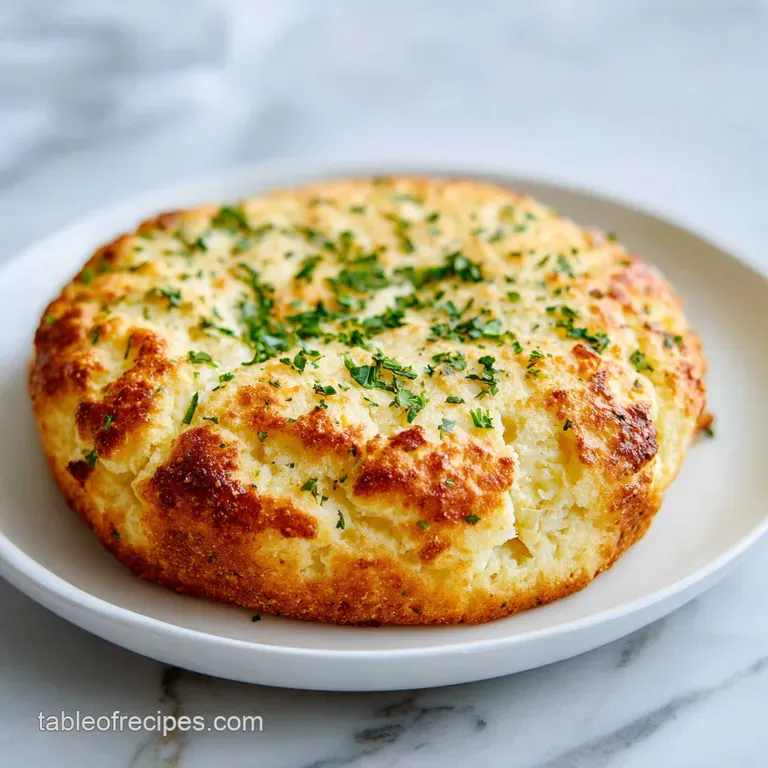
- Time:15 minutes prep + 30 minutes cook = 45 minutes total
- Flavor/Texture Hook: Airy, herbaceous, and incredibly velvety
- Perfect for: Weekend brunch, keto meal prep, or gluten-free snacking
- Fluffy Keto Cottage Cheese Cloud Bread Recipe with Garlic and Herbs
- Why This Technique Creates Vertical Rise
- Strategic Component Selection for Flavor Balance
- Detailed Shopping List and Substitutes
- Essential Kitchen Tools for Success
- Step by Step Baking Process
- Fixing Your Texture and Rise
- Mathematical Adjustments for Batch Cooking
- Debunking Common Bread Myths
- Safe Storage and Warming Methods
- Perfect Complements and Serving Ideas
- Recipe FAQs
- 📝 Recipe Card
Fluffy Keto Cottage Cheese Cloud Bread Recipe with Garlic and Herbs
The cultural heritage of "bread" is shifting, and it's fascinating to watch. For generations, bread was defined by the hearth, the grain, and the slow rise of yeast. In many cultures, the "daily bread" was the literal soul of the table.
But as our understanding of nutrition has evolved, we’ve begun to look for that same comfort in places we never expected like the dairy aisle. Discover the ultimate fluffy keto cottage cheese cloud bread, infused with garlic and herbs, for a truly standout bite.
I remember the first time I saw someone whip cottage cheese into a batter. It felt like a kitchen rebellion. Traditionally, cottage cheese was the lonely scoop on a diet plate in the 70s, but today, we’ve reclaimed it as a powerhouse of structural integrity.
This recipe isn't about compromising; it's about a new kind of culinary tradition where we use modern techniques to create that familiar, pillowy sensation without the heavy "brick in-the stomach" feeling that sometimes follows a traditional loaf.
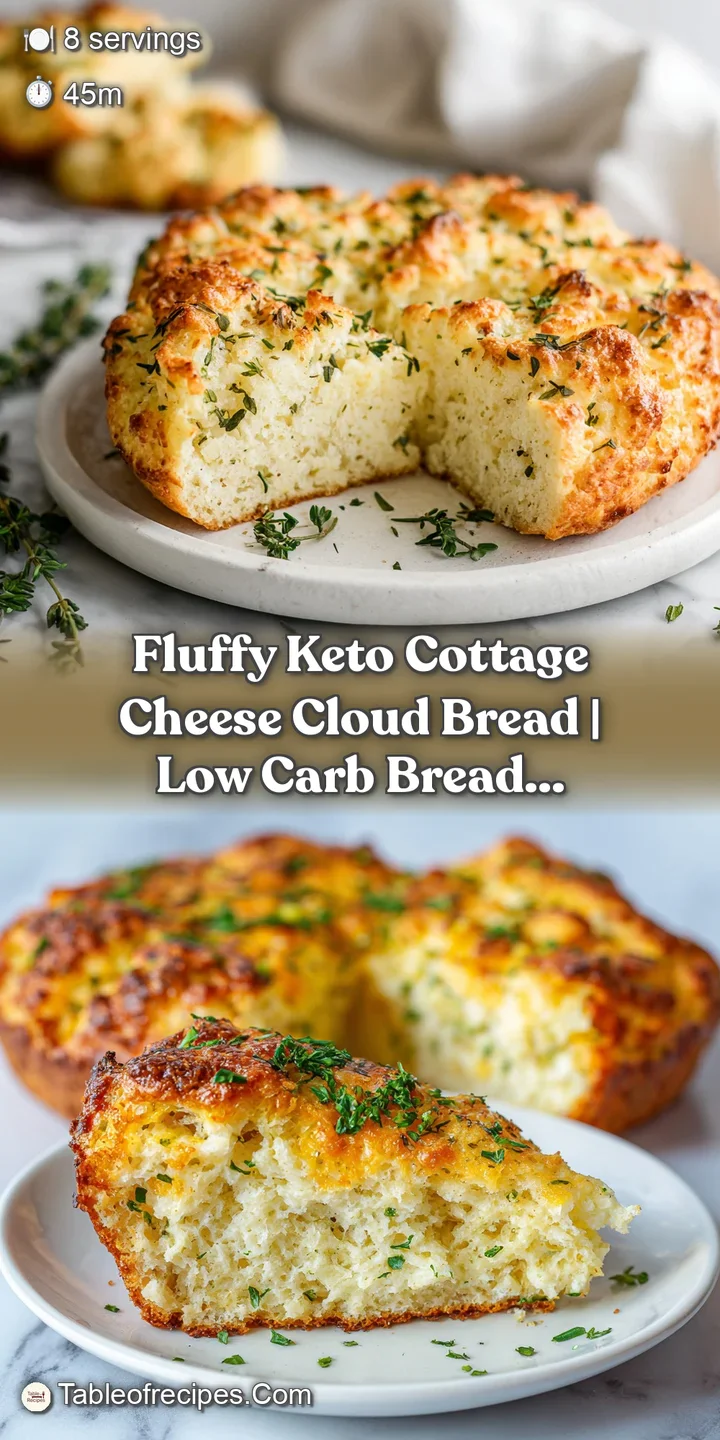
Right then, let's talk about the experience. When you pull these out of the oven, the aroma of toasted garlic and dried Italian herbs hits you before you even see the golden tops. They don't just sit there; they almost shimmer.
It’s the kind of bake that makes you feel like a master of the kitchen because you’ve taken such simple ingredients and turned them into something that looks like it belongs in a high end bistro. We’re aiming for a result that is weekend worthy but simple enough for any Tuesday night.
Why This Technique Creates Vertical Rise
Protein Scaffolding: When we whip the egg whites, we’re creating a physical lattice of protein that traps air, providing the "lift" usually handled by yeast or baking powder.
Moisture Control: Pureeing the cottage cheese creates a smooth, heavy base that, when folded correctly, provides just enough weight to keep the bread from floating away while maintaining a moist, tender interior.
Structural Reinforcement: The addition of cream of tartar acts as a stabilizer, preventing the delicate air bubbles in the egg whites from popping when they meet the heavier yolk and cheese mixture.
Maillard Browning: Even at a low temperature of 150°C, the proteins in the cheese and eggs react with the tiny amount of natural sugars to create a savory, golden brown crust that shatters slightly on the first bite.
| Method | Total Time | Final Texture | Best For |
|---|---|---|---|
| Standard Oven | 45 minutes | Very light and airy | Sandwiches and toast |
| Air Fryer | 25 minutes | Crispier exterior | Quick snacks or dippers |
| Toaster Oven | 40 minutes | Slightly denser | Small batches for one |
Unlike a Classic White gluten-free Bread, which relies on starches and gums for its crumb, this cloud bread is almost entirely built on protein. This means the way it interacts with heat is fundamentally different it doesn't "dry out" as much as it "sets."
Strategic Component Selection for Flavor Balance
| Component | Scientific Role | Pro Secret |
|---|---|---|
| Egg Whites | Structural Matrix | Ensure the bowl is glass or metal; plastic retains oil that kills bubbles. |
| Cottage Cheese | Moisture and Fat | Use full fat for a richer mouthfeel and better "bread like" chew. |
| Cream of Tartar | Acidic Stabilizer | This is non negotiable for keeping the peaks stiff during the folding process. |
| Parmesan Cheese | Texture Finisher | Adds a salty crunch that helps the top set without becoming sticky. |
Detailed Shopping List and Substitutes
- 3 large eggs, room temperature: These are the foundation. Why this? Room temp whites whip to a much higher volume than cold ones.
- Substitute: There is no direct substitute for eggs in this specific protein based recipe.
- 0.5 cup full fat cottage cheese: Provides the bulk and "crumb." Why this? Full fat prevents the bread from becoming overly rubbery.
- Substitute: Whole milk ricotta (provides a slightly grainier, more artisanal texture).
- 0.25 tsp cream of tartar: The stabilizer. Why this? It strengthens the egg white proteins.
- Substitute: 0.5 tsp lemon juice (same acidity, though slightly less stable).
- 0.5 tsp garlic powder: For that savory kick. Why this? Powder distributes more evenly than fresh garlic in this light batter.
- Substitute: Onion powder (gives a sweeter, more mellow aromatic profile).
- 1 tsp dried Italian seasoning: The herb infusion. Why this? Dried herbs hold their flavor better during the 30 minute bake.
- Substitute: Dried oregano and thyme (classic Mediterranean notes).
- 0.25 tsp fine sea salt: Enhances all other flavors. Why this? Fine salt dissolves instantly into the cheese puree.
- Substitute: Kosher salt (use slightly more as it is less dense).
- 1 tbsp grated Parmesan cheese: The topping. Why this? Creates a savory, golden "skin" on the bread.
- Substitute: Nutritional yeast (keeps the savory profile but adds a nutty, dairy-free note).
Essential Kitchen Tools for Success
To master this recipe, you don't need a professional kitchen, but a few specific tools make the difference between a flat pancake and a fluffy cloud. A high speed blender is my go to for the cottage cheese because you want that mixture to be velvety, not lumpy. If you see curds, keep blending.
You’ll also want a stand mixer or a powerful hand mixer. Whisking egg whites to stiff peaks by hand is a workout I wouldn't wish on anyone!
Finally, grab a high-quality silicone spatula. This is for the "fold." We aren't stirring; we are gently tucking the yolk mixture into the whites. I once used a heavy wooden spoon and ended up with something resembling a sad omelet. Trust me, the flexibility of silicone is your best friend here.
Also, always use parchment paper not wax paper on your baking sheet. These clouds love to stick, and parchment ensures they release with their beautiful bottoms intact.
step-by-step Baking Process
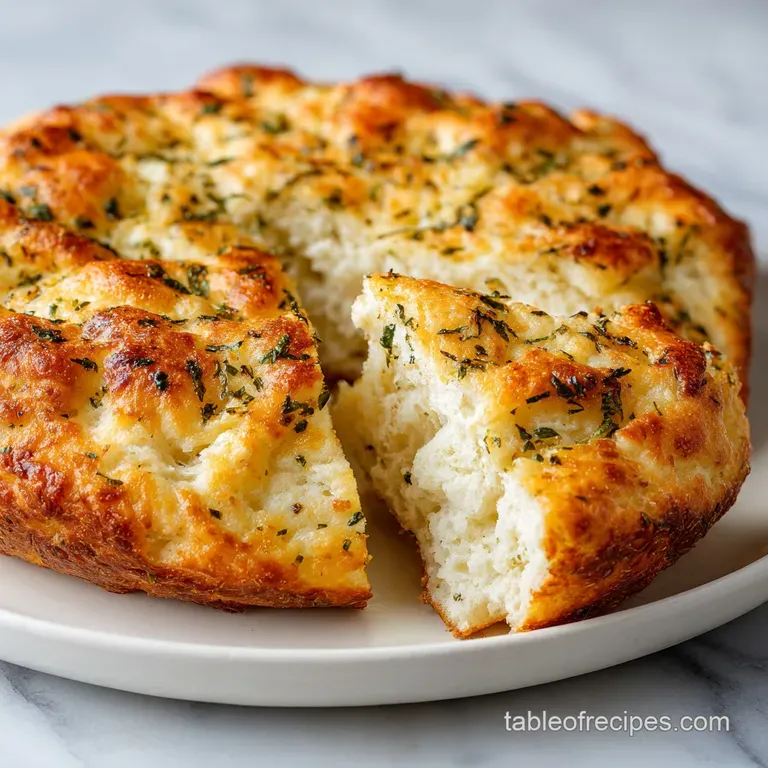
- Separate the 3 large egg yolks from the whites into two clean bowls. Note: Any trace of yolk in the whites will prevent them from fluffing up.
- Place the 0.5 cup cottage cheese and egg yolks into a blender. Process until the mixture is completely silky with no visible curds.
- Stir the 0.5 tsp garlic powder, 1 tsp Italian seasoning, and 0.25 tsp salt into the cottage cheese mixture.
- In a separate bowl, add the whites and 0.25 tsp cream of tartar. Whisk on high speed until peaks stand straight up when the whisk is lifted.
- Slowly pour the yolk mixture over the whites. Use a silicone spatula to fold until no large white streaks remain.
- Line a tray with parchment. Scoop the batter into 8 mounds and flatten into 4 inch discs.
- Sprinkle the 1 tbsp Parmesan cheese evenly over the tops of the discs.
- Bake at 150°C for 25–30 minutes until the surfaces are golden brown and springy to the touch.
- Immediately move the rounds to a wire rack. Note: This prevents steam from building up underneath and making the bread soggy.
Fixing Your Texture and Rise
The biggest hurdle with any cottage cheese bread is the moisture. If your kitchen is humid, or if your eggs were particularly large, the batter might feel a bit more liquid than usual. Don't panic. The key is in the "stiff peak" stage.
If those whites aren't practically standing at attention, the bread will spread into a flat sheet rather than staying in a neat disc.
Achieving Stiff Glossy Peaks
If your egg whites are taking forever to fluff up, check your bowl. Even a microscopic film of grease can ruin the structure. A quick trick I use is wiping the bowl and whisk with a paper towel dipped in white vinegar before starting.
It strips away any hidden oils and ensures your whites reach that gorgeous, velvety volume every single time.
Preventing a Lingering Egg Taste
Some people find cloud bread a bit "eggy." This usually happens if the herbs aren't well incorporated or if the bread is eaten while still hot. The garlic and Italian seasoning are your shields here.
Let the bread cool completely; as it reaches room temperature, the egg flavor recedes, and the savory garlic and cheese notes step forward.
| Problem | Root Cause | Solution |
|---|---|---|
| Bread is flat | Whites deflated during folding | Use a "cut and fold" motion; never stir or whisk once whites are whipped. |
| Soggy bottoms | Trapped steam after baking | Move to a wire rack immediately; don't let them cool on the baking sheet. |
| Rubbery texture | Over blending or low-fat | Ensure you use full fat cottage cheese and stop folding as soon as combined. |
Common Mistakes Checklist • Ensure your mixing bowl is bone dry and oil free before adding egg whites. • Do not skip the cream of tartar; it is the "glue" for your air bubbles.
• Preheat your oven for at least 10 minutes to ensure an even 150°C from the start. • Use a gentle hand if you hear the "pop" of bubbles while folding, you’re being too rough. • Let them cool! The structure "sets" as the temperature drops.
Mathematical Adjustments for Batch Cooking
If you’re hosting a brunch and need to scale this up, it’s a fairly linear process, but there are some caveats. For a double batch (16 servings), you can simply double all ingredients. However, I recommend whipping the egg whites in two separate batches unless you have a very large stand mixer bowl.
Overcrowding the bowl makes it harder to get that essential air incorporation.
When scaling down to a half batch (4 servings), use 2 small eggs or 1.5 large eggs (whisk one egg and use half by weight). You’ll want to use a smaller blender or an immersion blender to ensure the 0.25 cup of cottage cheese actually hits the blades.
Cook times usually remain the same, but keep a close eye on them at the 20 minute mark, as smaller batches in a large oven can sometimes brown faster.
Debunking Common Bread Myths
One common myth is that you can't get a "real" bread texture without flour. While this won't be a sourdough, the cottage cheese provides a surprising amount of "chew" thanks to the casein protein. It’s not just air; there is actual substance there that satisfies the need for a vessel for your sandwich fillings.
Another misconception is that you need high heat to "sear" the bread. In reality, these delicate protein structures prefer a low and slow approach. Baking at 150°C allows the interior to set firmly before the outside burns.
If you crank the heat to 200°C, you’ll end up with a burnt exterior and a liquid, weeping center.
Safe Storage and Warming Methods
These little clouds are surprisingly hardy if treated with respect. Store them in an airtight container in the fridge for up to 3 days. I like to place a small piece of parchment paper between each round to prevent them from sticking together.
For the best experience, don't eat them cold straight from the fridge; they can feel a bit damp.
When it comes to zero waste, don't throw away any "fails" that might have come out too flat. Chop them up and toast them in a pan with a little butter to make "cloud croutons" for a salad.
If you have leftover cottage cheese, it can be stirred into scrambled eggs for extra creaminess or used as a base for a high protein veggie dip.
Freezing and Reheating: You can freeze these for up to 1 month. Wrap them individually in plastic wrap and then place them in a freezer bag. To reheat, don't use the microwave it will turn them into rubber.
Instead, pop them into a toaster on a low setting or a warm oven for 5 minutes. They’ll regain their slight exterior crispness and tender heart.
Perfect Complements and Serving Ideas
These garlic and herb rounds are the perfect base for a variety of meals. My absolute favorite way to serve them is as the "bread" for a decadent avocado toast. The creaminess of the avocado against the herbaceous bread is a match made in heaven. If you're looking for something more substantial, they pair perfectly with a warm Broccoli Casserole recipe during a cozy weekend lunch.
For a dinner application, try using them as "dippers" for a bowl of soup. They are sturdy enough to scoop up thick stews but light enough that you won't feel overstuffed. Because of the garlic and Italian seasoning, they are also a brilliant accompaniment to a charcuterie board, acting as a soft, savory contrast to sharp cheeses and cured meats.
Whatever you choose, these clouds prove that low carb doesn't have to mean low flavor.
Recipe FAQs
Why did my egg whites not form stiff peaks?
Check for fat residue in your mixing bowl. Even a tiny drop of egg yolk or grease will prevent the whites from aerating properly. Ensure your bowl and whisk are impeccably clean before you begin.
How to ensure the texture stays fluffy and light?
Fold the yolk mixture into the whites using a gentle "cut and fold" motion. If you stir aggressively, you will deflate the air bubbles you worked so hard to create. If you enjoyed mastering the fluffy texture here, apply the same light handed folding technique when working with other egg-based batters.
Is it true I can use a standard mixer for the cottage cheese blend?
No, this is a common misconception. You must use a high speed blender or food processor to ensure the cottage cheese is completely silky with no visible curds, as a standard hand mixer cannot break down the cheese solids effectively.
How to prevent the bread from becoming soggy after baking?
Transfer the bread to a wire cooling rack immediately after pulling it from the oven. Letting it sit on the hot baking sheet traps steam underneath, which softens the crust and ruins the texture.
How to achieve a uniform golden brown color?
Bake the discs at 300°F (150°C) for the full 25 30 minutes without opening the oven door. Consistent heat is key to drying out the exterior while maintaining the airy interior structure.
Is it possible to make the batter in advance?
No, the batter needs to be baked immediately. Because the structure relies on the air whipped into the egg whites, the mixture will deflate quickly if it is left sitting on the counter.
How to tell if the bread is perfectly cooked?
Look for a firm touch and a golden brown surface. The bread should feel solid, not squishy, when gently pressed, indicating that the egg structure has fully set.
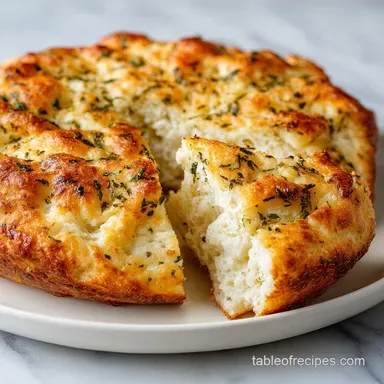
Keto Garlic Cottage Cheese Bread
Ingredients:
Instructions:
Nutrition Facts:
| Calories | 44 kcal |
|---|---|
| Protein | 4.2 g |
| Fat | 2.6 g |
| Carbs | 0.7 g |
| Fiber | 0 g |
| Sugar | 0.5 g |
| Sodium | 134 mg |
