Lemon Meringue Pie: Tangy and Creamy
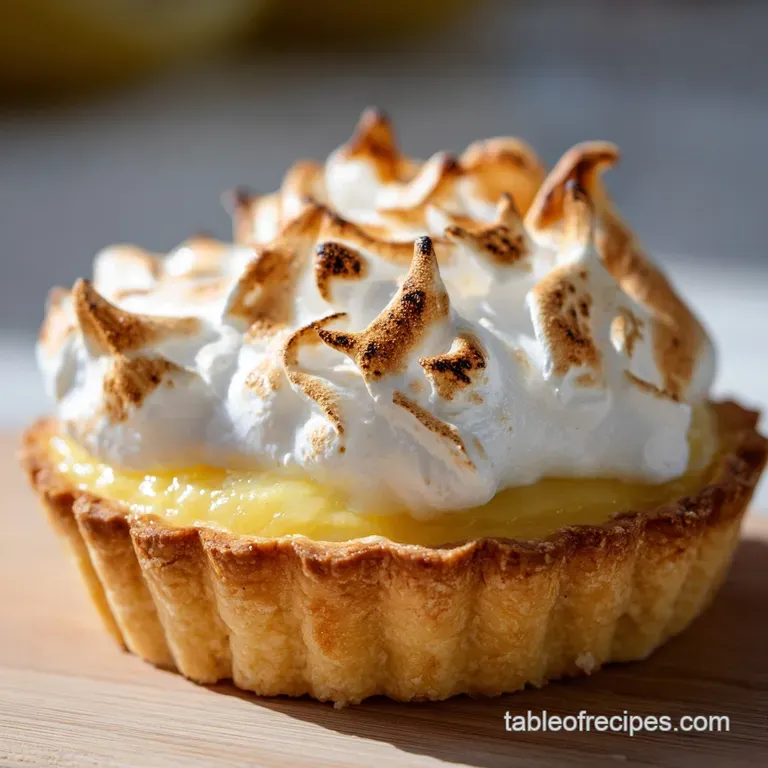
- Time: Active 30 minutes, Passive 3 hours 25 mins, Total 3 hours 55 mins
- Flavor/Texture Hook: A velvety, citrus sharp curd topped with a cloud like, stable meringue over a shattering, butter rich crust.
- Perfect for: High precision home bakers seeking a consistent, professional grade dessert for special occasions.
- Best Lemon Meringue Pie Recipe with Tangy and Creamy Filling
- Advantages of This Best Lemon Meringue Pie Recipe with Tangy and Creamy Filling
- Component Analysis and Selection for Superior Texture
- Essential Laboratory Grade Tools for Precise Pastry
- Systematic Procedure for Constructing the Perfect Pie
- Diagnostic Solutions for Common Structural Failures
- Adapting Ratios for Custom Flavor Profiles
- Optimized Storage and Waste Management Protocols
- Final Presentation Guidelines and Sensory Integration
- Technical Myths in Citrus Pastry
- Recipe FAQs
- 📝 Recipe Card
Best Lemon Meringue Pie Recipe with Tangy and Creamy Filling
Few things in the pastry world are as frustrating as a lemon meringue pie that looks magnificent on the counter but turns into a puddle of sugary tears and limp pastry the moment the knife hits it.
We have all experienced that disappointing pool of liquid at the bottom of the dish, or the meringue that slides right off the lemon curd like a melting glacier. These failures are not random occurrences; they are the result of specific chemical reactions, or a lack thereof, within the layers of the dessert.
This approach treats the construction of the pie as a series of controlled thermal events. By understanding how proteins in the egg whites stabilize and how starch granules in the lemon base gelatinize, we can remove the guesswork from the process.
We are moving away from the "hope for the best" method and toward a reliable system that produces a clean slice every single time. Discover our very best lemon meringue pie recipe, featuring a delightfully tangy and creamy filling.
You can expect a crust that holds its own against the moisture of the filling and a meringue that stays anchored from the first bite to the last. This is the definitive fix for the "soggy bottom" syndrome and the "weeping" effect that plagues so many traditional recipes.
We will focus on the exact timing windows and temperature checkpoints required to ensure the filling sets with a silky, non rubbery consistency while the topping remains voluminous and glossy.
Advantages of This Best Lemon Meringue Pie Recipe with Tangy and Creamy Filling
Moisture Barrier Technology: Brushing the hot, par baked crust with a thin layer of egg white creates a hydrophobic seal. This prevents the steam and moisture from the lemon filling from migrating into the pastry, ensuring the bottom remains crisp and structural rather than becoming a saturated, doughy mess.
Starch Gelatinization Control: Utilizing a combination of cornstarch and acidic lemon juice requires precise heating to the bubbling point. This ensures the starch chains fully expand and trap the liquid, resulting in a curd that is firm enough to slice but soft enough to melt on the tongue without a grainy or "floury" aftertaste.
Protein Matrix Stabilization: The addition of a cornstarch slurry to the egg whites during the whipping process provides a secondary support structure. This prevents the protein bonds from over tightening and squeezing out water, which is the primary cause of meringue "weeping" or shrinking during the cooling phase.
Thermal Anchoring: Spreading the meringue onto the lemon filling while it is still steaming hot is a critical step for adhesion. The residual heat from the filling begins to cook the bottom of the meringue immediately, creating a molecular bond between the two layers that prevents the topping from sliding off during service.
Technical Performance Comparison
| Method | Preparation Time | Texture Profile | Structural Integrity |
|---|---|---|---|
| Stovetop Curd | 10 minutes | Velvety and ultra smooth | High - sets rapidly |
| Oven Baked Filling | 25 minutes | Denser, more custard like | Medium - prone to cracks |
| Combined Method | 15 minutes | Optimal creaminess | Superior - best of both worlds |
Establishing the correct thermal environment for your ingredients is the foundation of consistency. When we work with starch based thickeners, the temperature must reach a specific threshold to activate the thickening power fully.
If the mixture does not reach a simmer, the pie will be runny; if it is boiled too aggressively, the acid in the lemon can actually begin to break the starch chains back down, leading to a thinning effect. We aim for a gentle, consistent bubbling to achieve the "tangy and creamy filling" promised by this recipe.
Component Analysis and Selection for Superior Texture
| Ingredient | Science Role | Pro Secret |
|---|---|---|
| Cornstarch | Primary thickening agent that creates a stable gel. | Dissolve in cold water first to prevent insoluble lumps. |
| Egg Yolks | Provides lipid based richness and emulsification. | Tempering is vital to prevent the yolks from scrambling in the heat. |
| Cream of Tartar | Acidic stabilizer that prevents egg protein over coagulation. | Use exactly 0.5 tsp to maintain a pH level that supports foam. |
| Unsalted Butter | Adds "mouthfeel" and a glossy finish to the curd. | Add at the very end to create a cold emulsion sheen. |
Success in high stakes baking is often determined by the quality and state of your raw materials. For the crust, 1.5 cups (190g) of all purpose flour provides the necessary gluten structure, while 0.5 cup (113g) of unsalted butter must be ice cold to create those distinct, flaky pockets.
If the butter melts during the mixing stage, you lose the "shatter" effect.
The filling relies on 6 tbsp (45g) of cornstarch to bind 1.5 cups (355ml) of water and 0.5 cup (120ml) of fresh lemon juice. Never use bottled juice; the enzymatic profile and acidity of fresh lemons are required for the clean, sharp flavor that cuts through the sweetness of the 1.5 cups (300g) of granulated sugar.
For the topping, 4 large egg whites must be at room temperature to achieve maximum volume, stabilized by 0.5 cup (100g) of superfine sugar which dissolves more readily than standard granulated sugar.
Essential Laboratory Grade Tools for Precise Pastry
To achieve the best lemon meringue pie recipe with tangy and creamy filling, specific tools are non negotiable. A heavy bottomed stainless steel saucepan is required for the filling to ensure even heat distribution; thin pans create hot spots that can scorch the cornstarch or curdle the egg yolks.
A balloon whisk is essential for aerating the meringue, but a stand mixer such as a KitchenAid will provide the most consistent power for achieving stiff, glossy peaks without manual fatigue.
Precision is further aided by a digital thermometer and a fine mesh sieve. While not explicitly mentioned in every recipe, straining the finished lemon filling through a sieve before pouring it into the crust ensures a perfectly "velvety" texture by removing any small bits of zest or accidentally cooked egg.
Finally, a 9 inch glass or ceramic pie dish is preferred over metal, as it conducts heat more slowly, which protects the delicate crust from over browning while the meringue finishes in the oven.
Systematic Procedure for Constructing the Perfect Pie
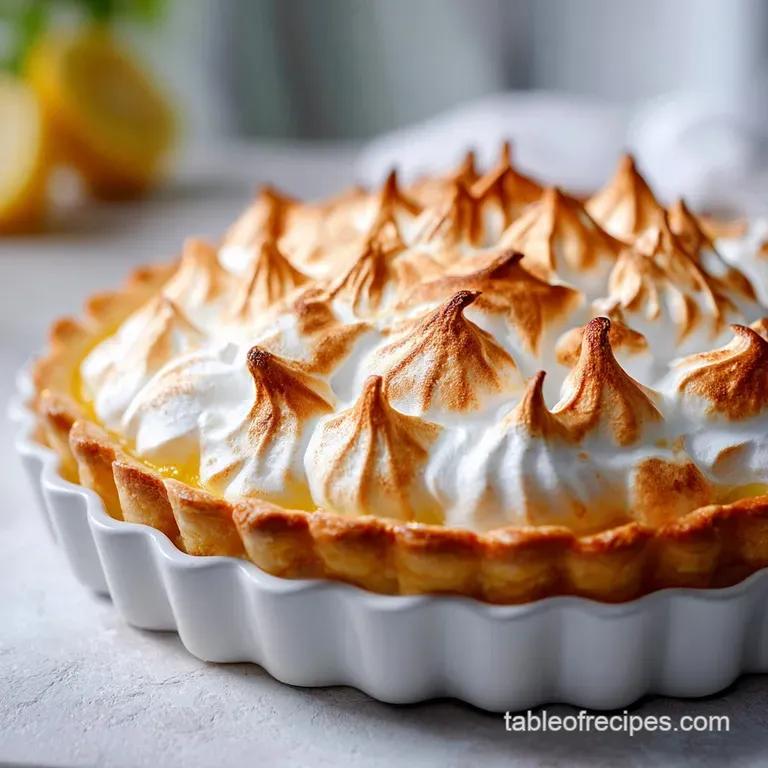
Phase 1: The Foundations
- Combine 1.5 cups (190g) all purpose flour and 0.5 tsp sea salt in a large bowl. Cut in 0.5 cup (113g) ice cold cubed butter using a pastry cutter until pea sized crumbs form. Note: These butter chunks create steam pockets for flakiness.
- Incorporate 4 tbsp ice water, one tablespoon at a time, mixing gently until the dough just holds together when squeezed.
- Wrap the dough in plastic and refrigerate for 30 minutes to allow the gluten to relax and the moisture to distribute evenly.
- Roll the dough on a floured surface and fit it into a 9 inch pie dish. Line with parchment paper and fill with pie weights or dried beans.
- Bake at 375°F (190°C) for 15 minutes until the edges are set and pale gold.
- Remove the weights and parchment. Brush the bottom and sides of the crust with a thin layer of 1 large egg white. Bake for an additional 5 minutes until the base is dry and sealed.
Phase 2: The Citrus Core
- In a medium saucepan, whisk together 1.5 cups (300g) sugar, 6 tbsp (45g) cornstarch, 1.5 cups (355ml) water, 0.5 cup (120ml) lemon juice, and 1 tbsp lemon zest.
- Cook over medium heat, stirring constantly with a whisk, until the mixture reaches a full boil and turns translucent.
- Temper the 4 egg yolks by whisking a small amount of the hot lemon mixture into the yolks, then slowly pour the yolk mixture back into the saucepan.
- Cook for exactly 2 minutes while stirring until the filling is thick and glossy. Remove from heat and stir in 2 tbsp (28g) butter until melted.
Phase 3: The Sky High Topping
- In a clean, oil free bowl, beat 4 large egg whites and 0.5 tsp cream of tartar until soft, floppy peaks form.
- Gradually add 0.5 cup (100g) superfine sugar and the cornstarch slurry (1 tsp cornstarch dissolved in 1 tbsp water).
- Continue beating at high speed until peaks are stiff, upright, and highly reflective.
- Pour the hot filling into the par baked crust. Immediately mound the meringue on top, using a spatula to spread it to the very edge of the crust. Note: This "sealing" prevents the meringue from shrinking away from the sides.
- Bake at 350°F (175°C) for 10-15 minutes until the peaks are toasted golden brown.
- Transfer to a wire rack and cool at room temperature for at least 1 hour, then refrigerate for 3 hours before attempting to slice.
Diagnostic Solutions for Common Structural Failures
Why Your Meringue Weeps
Weeping is usually caused by undercooked meringue or a lack of stability in the protein foam. If the sugar isn't fully dissolved, it attracts moisture from the air, creating those characteristic beads of syrup.
Using superfine sugar and the cornstarch slurry stabilizer in our best lemon meringue pie recipe with tangy and creamy filling acts as a preventative measure. Plus,, placing the meringue on a cold filling causes the bottom of the foam to stay raw, which eventually collapses into liquid.
| Problem | Root Cause | Solution |
|---|---|---|
| Soggy Bottom | Filling moisture migrating into the crust. | Use the egg white moisture barrier and par bake thoroughly. |
| Shrinking Meringue | Foam was not anchored to the crust edges. | Spread meringue so it touches the pastry rim completely. |
| Runny Filling | Starch was not heated to the boiling point. | Ensure the curd bubbles for at least 30 seconds before adding yolks. |
For those who find the lemon flavor too muted, the issue often lies in the zest. The essential oils are located in the outermost yellow layer of the skin; avoid the white pith, which is bitter and lacks citrus punch.
If you find your crust is shrinking during the bake, you likely over worked the dough, developing too much gluten. Let it rest longer in the fridge to allow those protein strands to settle.
Common Mistakes Checklist
- ✓ Never use a plastic bowl for whipping egg whites, as plastic retains microscopic oil films that deflate foam.
- ✓ Ensure the lemon mixture reaches a bubbling state to fully activate the cornstarch's thickening properties.
- ✓ Apply the meringue to the filling while it is still hot to ensure a thermal bond.
- ✓ Avoid making meringue on highly humid days, as the sugar will pull moisture from the atmosphere.
- ✓ Allow the pie to cool completely at room temperature before refrigerating to prevent "beading" from condensation.
Adapting Ratios for Custom Flavor Profiles
Scaling this recipe requires attention to the ratio of thickener to liquid. If you wish to make a smaller 6 inch pie, you can halve all ingredients, but you must reduce the bake time for the crust by approximately 20%.
For a smaller batch, use a hand mixer to ensure you can reach the bottom of the bowl when whipping the smaller volume of egg whites.
When doubling the recipe for two pies, do not simply double the salt or zest. Use 1.5x the amount of salt and zest to avoid an overpowering flavor profile. If you find yourself wanting a different citrus profile, you can swap the lemon juice for lime or even a tart orange juice. If you enjoy this type of citrus forward dessert but want something even faster, you might enjoy exploring my Overnight Oats with Fruit for a breakfast friendly version of tangy flavors.
Decision Shortcut Guide
- If you want a sharper citrus punch: Increase the lemon zest to 1.5 tablespoons and reduce the sugar in the filling by 2 tablespoons.
- If you want a taller, fluffier meringue: Add a fifth egg white to the topping while keeping the sugar and cream of tartar amounts the same.
- If you want a more "shattering" crust: Replace 1 tablespoon of the ice water with cold vodka, which inhibits gluten formation.
Optimized Storage and Waste Management Protocols
Storing a lemon meringue pie is a delicate operation. Because of the high sugar and protein content, the meringue will naturally begin to break down after 24 hours.
Keep the pie in the refrigerator, but do not cover it tightly with plastic wrap, as this will trap moisture and cause the meringue to dissolve into a sticky glaze. It is best consumed within 2 days.
If you find yourself with extra lemon rinds, do not discard them; they can be simmered with equal parts sugar and water to create a lemon syrup for cocktails or tea.
Leftover egg yolks (if you had used extra whites) can be transformed into a rich custard or added to a Roasted Tomato Basil Soup to add a velvety body and richness. The pie itself does not freeze well, as the cell structure of the meringue will collapse upon thawing, and the cornstarch gel in the filling can become "weepy" and spongy when subjected to freezing temperatures.
Final Presentation Guidelines and Sensory Integration
The moment of truth arrives during the slicing. To achieve clean, professional looking wedges of your best lemon meringue pie recipe with tangy and creamy filling, use a thin, sharp knife dipped in hot water and wiped dry between every single cut.
This prevents the meringue from sticking to the blade and pulling away from the filling. The heat from the blade helps slice through the cold fats in the crust and the proteins in the topping without crushing the delicate layers.
A well executed pie should offer a specific sensory sequence: the initial "shatter" of the golden crust, followed by the "silky" and "velvety" transition into the lemon curd, finishing with the "cloud like" lightness of the meringue.
Avoid the temptation to torch the meringue with a kitchen torch if you have already baked it; the oven provides a more even, structural set to the foam that a torch simply cannot replicate.
Serve each slice chilled, perhaps with a very small sprig of mint or a single fresh raspberry to provide a color contrast to the vibrant yellow and white palette.
Technical Myths in Citrus Pastry
One common misconception is that "weeping" is inevitable in humid climates. While humidity makes it harder, the cornstarch slurry technique used in this recipe creates a buffer that significantly resists moisture absorption. Another myth is that you must use a copper bowl for the best meringue.
While copper does react with egg whites to stabilize them, cream of tartar achieves the same chemical result in a standard stainless steel bowl by adjusting the pH levels of the proteins.
Finally, many believe that the "tangy and creamy filling" should be allowed to cool completely before the meringue is added. In reality, this is the most frequent cause of the "meringue slide." The heat is your friend here; it acts as a glue, partially cooking the bottom of the meringue as soon as it touches the lemon layer.
Trust the chemistry and apply the topping while the steam is still rising from the saucepan.

Recipe FAQs
What are common lemon meringue pie mistakes?
The most frequent errors are using plastic bowls for whites and ignoring humidity. Plastic retains thin layers of oil that collapse your foam, and high humidity causes the sugar in your meringue to absorb moisture, leading to a runny mess instead of firm peaks.
What is the secret to a good meringue?
Use cream of tartar and gradually add superfine sugar. Starting with room temperature whites and adding the stabilizer helps build a robust structure that holds its shape, much like how we master fluffy bread texture through controlled protein development.
How to improve lemon meringue pie?
Seal the meringue completely to the crust edges. This creates a physical bond that prevents the topping from shrinking or sliding off while it bakes at 350°F.
How to prevent the lemon filling from becoming runny?
Ensure the filling reaches a full, bubbling boil before removing it from the heat. You must hit this temperature to fully activate the cornstarch; if you stop early, the enzymes will break down the starch and the filling will weep.
How to avoid "weeping" or condensation beads on the meringue?
Cool the pie at room temperature for one full hour before moving it to the fridge. Introducing a hot pie directly into the cold refrigerator causes condensation to form between the filling and the topping, which ruins the texture.
Is it true I should bake the crust completely before adding the lemon filling?
Yes, partial baking is essential. You must bake the crust with weights for 15 minutes, then brush with egg white and bake 25 minutes more to create a moisture barrier that keeps the base crisp.
How to fix a meringue that won't reach stiff peaks?
Verify your mixing bowl is completely free of grease. If any trace of yolk or oil remains in the bowl, the egg whites will not achieve the necessary structural tension, no matter how long you beat them.
Best Lemon Meringue Pie

Ingredients:
Instructions:
Nutrition Facts:
| Calories | 471 kcal |
|---|---|
| Protein | 6.2 g |
| Fat | 16.8 g |
| Carbs | 76.4 g |
| Fiber | 0.8 g |
| Sugar | 51.2 g |
| Sodium | 152 mg |
